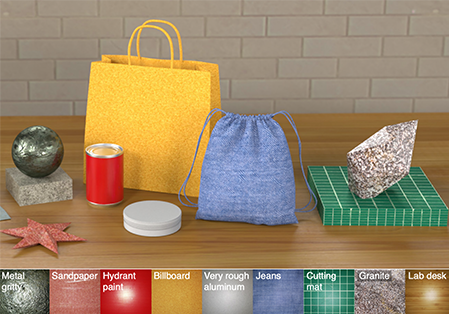
A team led by researchers from MIT’s Computer Science and Artificial Intelligence Lab (CSAIL) has developed an approach that they say can make texturing even less tedious, to the point where you can snap a pic of something you see in a store, and then go recreate the material on your home laptop
CSAIL Alliance members are invited to learn about a yet to be released design system from Professor Wojciech Matusik’s Computational Fabrication Group.
January 27 – 29, 2021 | MIT Professional Education
Examine how the latest tools and algorithms driving modern and predictive analysis can be applied in different fields, even when using unstructured data. Taught by CSAIL's Regina Barzilay, Tommi Jaakkola, and Stefanie Jegelka.
Discover how to build and utilize custom hardware for deep learning systems that extract meaningful information from your data. Taught by CSAIL's Vivienne Sze.
January 20-February 19, 2021 | MIT Professional Education
Learn techniques for applying Deep Reinforcement Learning methods to practical problems when it is impossible to collect large amounts of data. Taught by CSAIL's Pulkit Agrawal and IDSS's Cathy Wu.
Master the data tools you need—from numerical linear algebra to convex programming—to make smarter decisions and drive enhanced results. Taught by MIT CSAIL's Justin Solomon and MIT IDSS's Suvrit Sra.
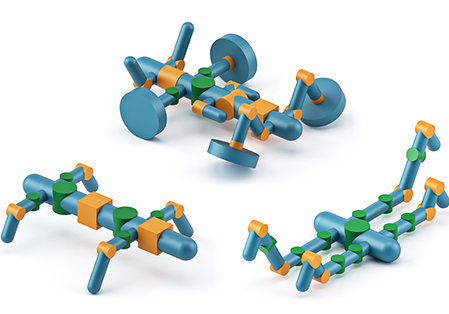
Choosing the right shape will be vital for your robot’s ability to traverse a particular terrain. And it’s impossible to build and test every potential form. But now an MIT-developed system makes it possible to simulate them and determine which design works best.
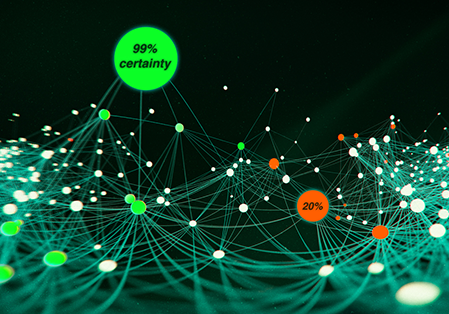
MIT researchers have developed a way for deep learning neural networks to rapidly estimate confidence levels in their output. The advance could enhance safety and efficiency in AI-assisted decision making.