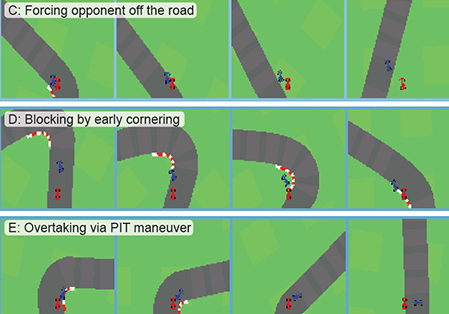
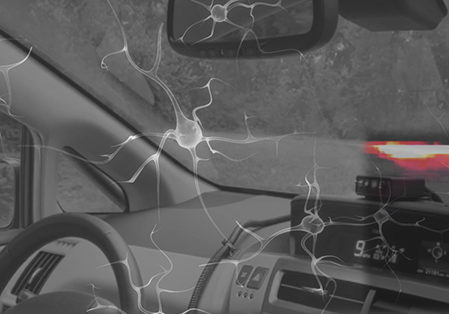
In a new paper, a team led by MIT computer scientists trained a neural network to learn NASCAR-style driving maneuvers purely from looking at a sequence of images taken from a two-person racing game. The network begins without knowing anything about cars, roads, or driving - and yet ultimately becomes able to do complex moves like overtaking an opponent on a turn and even forcing other cars off the road.
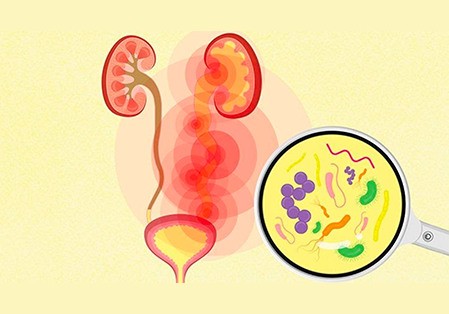
One paradox about antibiotics is that, broadly speaking, the more we use them, the less they continue to work. The Darwinian process of bacteria growing resistant to antibiotics means that, when the drugs don't work, we can no longer treat infections, leading to groups like the World Health Organization warning about our ability to control major public health threats.
Modern health care has been reinvigorated by the widespread adoption of artificial intelligence. From speeding image analysis for radiology to advancing precision medicine for personalized care, AI has countless applications, but can it rise to the challenge in the fight against Covid-19?
In an update to a five-year project from CSAIL and the Senseable City Lab, researchers have been developing the world's first fleet of autonomous boats for the City of Amsterdam, the Netherlands, and have recently added a new, larger vessel to the group: “Roboat II.”
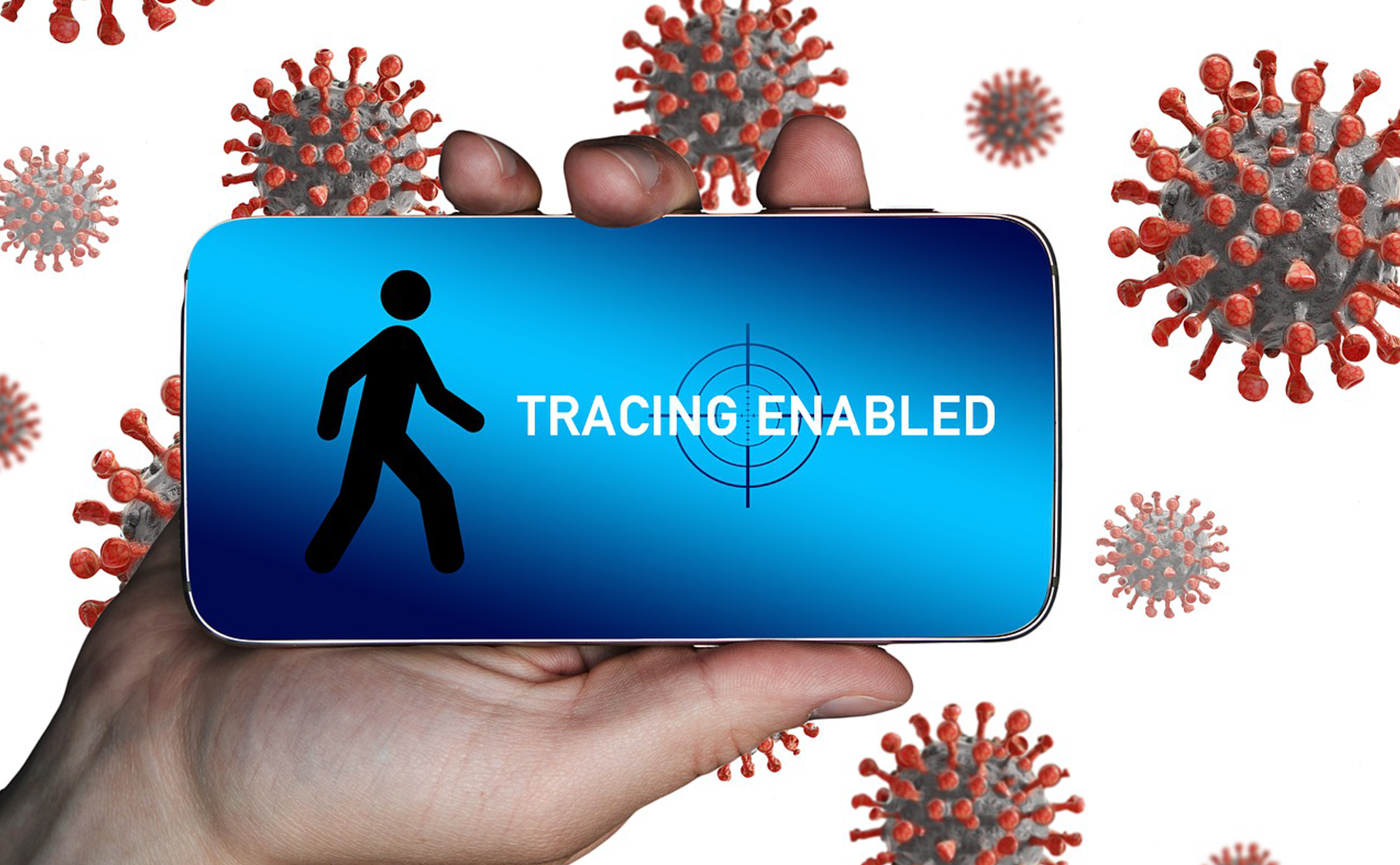
CSAIL Alliances and McDermott Will & Emery LLP (MWE) hosted a discussion on contact tracing featuring CSAIL’s Daniel Weitzner, McDermott Will & Emery’s Laura Jehl, and other industry speakers.
Machine learning is a computational tool used by many biologists to analyze huge amounts of data, helping them to identify potential new drugs. MIT researchers have now incorporated a new feature into these types of machine-learning algorithms, improving their prediction-making ability.
A 3D design environment from CSAIL lets users iterate an object’s shape and electronic function in one cohesive space, to add existing sensors to early-stage prototypes.
Artificial intelligence (AI) can become more efficient and reliable if it is made to mimic biological models. New approaches in AI research are hugely successful in experiments.
Scientists working at the intersection of AI and cancer care need to be more transparent about their methods and publish research that is reproducible, according to a new commentary co-authored by CSAIL's Tamara Broderick.