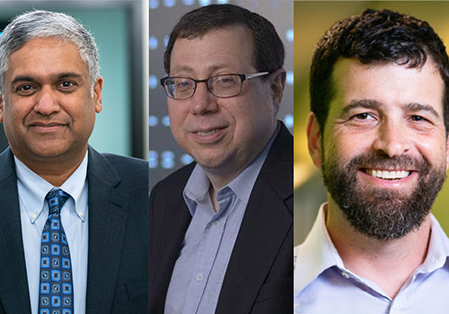
As part of the MIT Task Force on the Work of the Future’s series of research briefs, Professor Thomas Malone, Professor Daniela Rus, and Robert Laubacher collaborated on "Artificial Intelligence and the Future of Work," a brief that provides a comprehensive overview of AI today and what lies at the AI frontier.
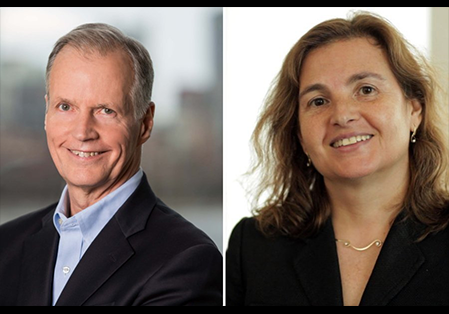
CSAIL's Alan Edelman and Sam Madden have been elected as fellows of the Association for Computing Machinery (ACM). Both faculty members are "recognized as the top 1 percent for their outstanding accomplishments in computing and information technology and/or outstanding service to ACM and the larger computing community".
CSAIL's Sabrina Neuman has found a way to fight the mismatch between a robot’s “mind” and body. The method, called robomorphic computing, uses a robot’s physical layout and intended applications to generate a customized computer chip that minimizes the robot’s response time.
Antonio Torralba, faculty head of Artificial Intelligence and Decision Making within the Department of Electrical Engineering and Computer Science (EECS) and the Thomas and Gerd Perkins Professor of Electrical Engineering and Computer Science, has been selected as a 2021 Fellow by the Association for the Advancement of Artificial Intelligence (AAAI).
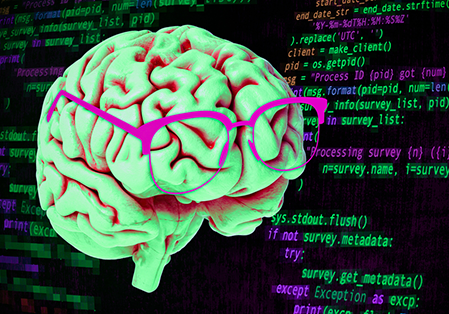
MIT neuroscientists have found that reading computer code does not activate the regions of the brain that are involved in language processing. Instead, it activates a distributed network called the multiple demand network, which is also recruited for complex cognitive tasks such as solving math problems or crossword puzzles.
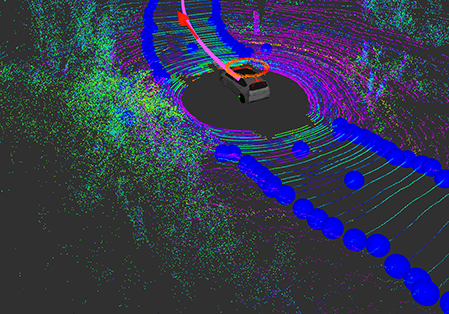
While autonomous cars have gained swift momentum since Leonardo da Vinci’s self-propelled cart circa 1500, the thought of going completely hands-free still feels slightly supernatural. These four-wheelers of the future use a combination of GPS for calculating longitude, latitude, speed, and course to navigate, LiDAR technologies, which use laser light pulses that map surroundings, and machine learning to see and understand -- but to what degree depends on the level of autonomy.
In this report, we conclude that recent fears about AI leading to mass unemployment are unlikely to be realized. Instead, we believe that—like all previous labor-saving technologies—AI will enable new industries to emerge, creating more new jobs than are lost to the technology.
CSAIL's Dr. Amar Gupta is developing technologies and business processes that are capable of quickly and accurately digitizing and processing financial and other documents with zero or minimal human intervention.
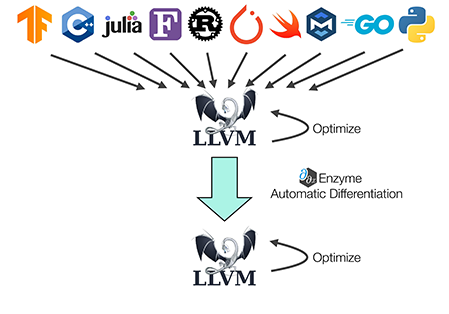
Suppose you're a machine-learning researcher trying to build a model that could help plan for the COVID-19 pandemic. You want to incorporate a disease simulator into the model, but it's written in the C++ programming language, rather than an existing machine-learning workflow like PyTorch or TensorFlow. A team from MIT CSAIL recently developed a clever work-around.
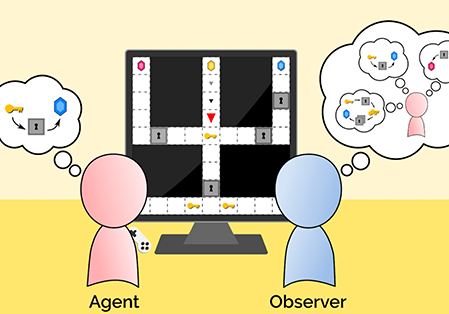
In the quest to capture social intelligence in machines, researchers from MIT’s Computer Science and Artificial Intelligence Laboratory (CSAIL) and the Department of Brain and Cognitive Sciences created an algorithm capable of inferring goals and plans, even when those plans might fail.