The winning team of researchers is a Dream Team of experts from Massachusetts Institute of Technology and the Boston University. It includes experts in neuroscience, robotics, computer science, computer vision, artificial intelligence, mathematical systems theory, and a host of other related advanced technology domains.
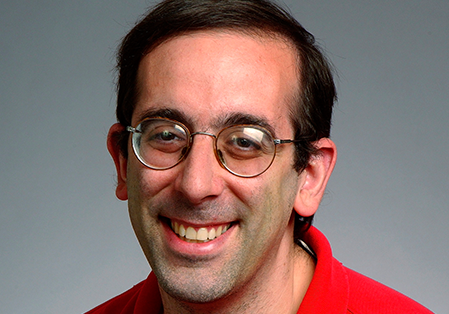
The American Academy of Arts and Sciences (AAAS) announced that MIT professor David Karger was among their new 2019 members. The new class of more than 200 members recognizes the outstanding achievements of individuals in academia, the arts, business, government, and public affairs.
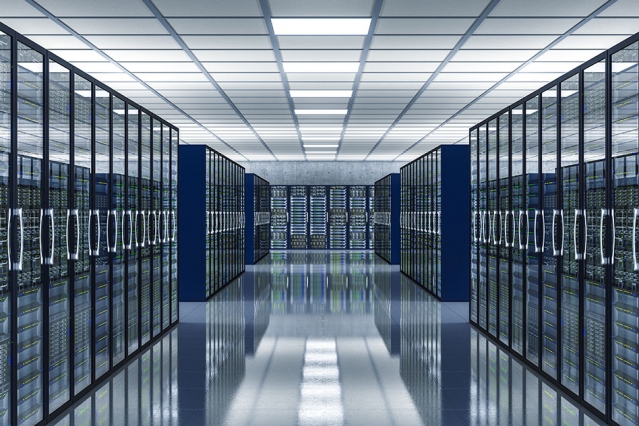
MIT researchers have designed a novel flash-storage system that could cut in half the energy and physical space required for one of the most expensive components of data centers: data storage.
MIT CSAIL researchers have devised a new way to find such patterns using machine learning.
Their system uses a neural network to automatically predict if a specific element will appear frequently in a data stream. If it does, it’s placed in a separate bucket of so-called “heavy hitters” to focus on; if it doesn’t, it’s handled via hashing.
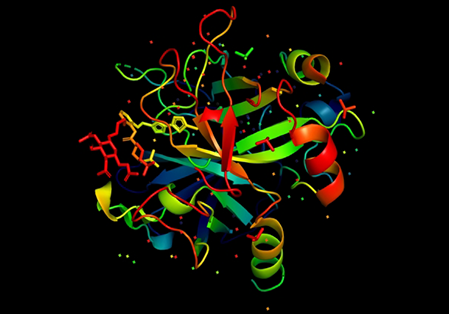
A machine-learning model from MIT researchers computationally breaks down how segments of amino acid chains determine a protein’s function, which could help researchers design and test new proteins for drug development or biological research.
MIT’s Computer Science and Artificial Intelligence Laboratory (CSAIL) held a special workshop with Microsoft Research to explore key challenges in creating trustworthy and robust artificial intelligence (AI) systems. The effort focused on addressing concerns about the trustworthiness of AI systems, including rising concerns with the safety, fairness, and transparency of the technologies.
Four CSAIL faculty were named among the top 100 global leaders in artificial intelligence for health, according to a new report developed by a top technology think-tank.
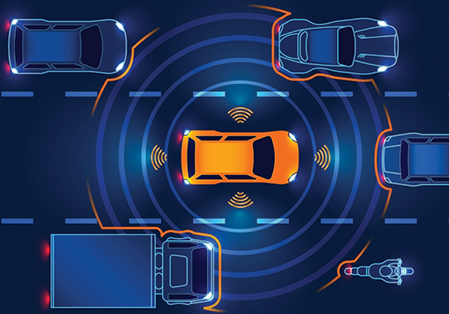
In the field of self-driving cars, algorithms for controlling lane changes are an important topic of study. But most existing lane-change algorithms have one of two drawbacks: Either they rely on detailed statistical models of the driving environment, which are difficult to assemble and too complex to analyze on the fly; or they’re so simple that they can lead to impractically conservative decisions, such as never changing lanes at all.
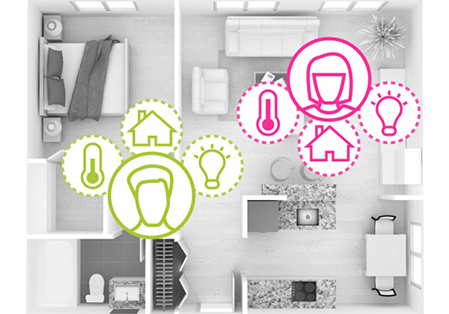
MIT researchers have built a system that takes a step toward fully automated smart home by identifying occupants, even when they’re not carrying mobile devices. The system, called Duet, uses reflected wireless signals to localize individuals.