Image
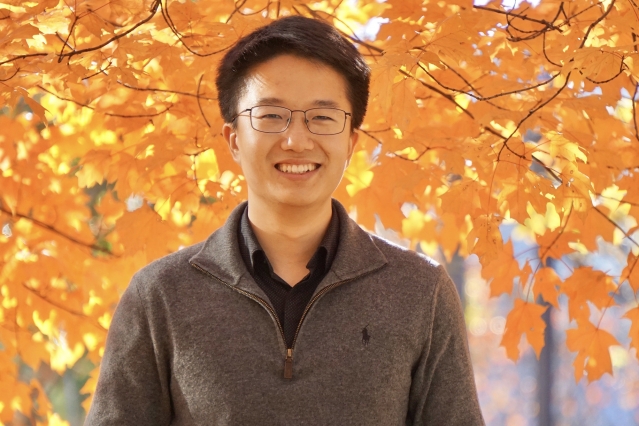
Yunzhu Li, MIT CSAIL
CSAIL article

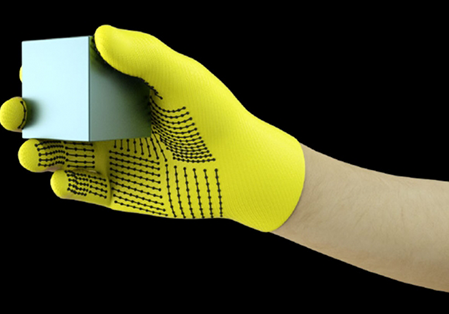
Robots that have been programmed to see or feel can’t use these signals quite as interchangeably. To better bridge this sensory gap, researchers from MIT’s Computer Science and Artificial Intelligence Laboratory (CSAIL) have come up with a predictive artificial intelligence (AI) that can learn to see by touching, and learn to feel by seeing.

Image
Reinventing the piston
CSAIL article

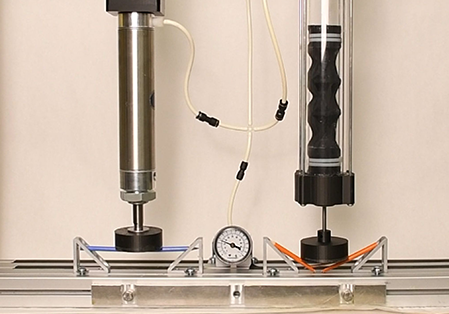
A team of roboticists at MIT CSAIL and Harvard has developed a new way to design pistons that replaces their conventional rigid elements with a mechanism using compressible structures inside a membrane made of soft materials.

Image
AI personalized care
CSAIL article

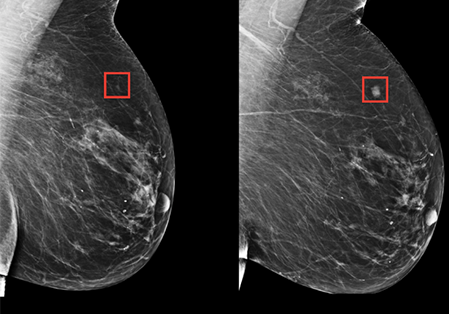
A team from MIT’s Computer Science and Artificial Intelligence Laboratory (CSAIL) and Massachusetts General Hospital (MGH) has created a new deep learning model that can predict from a mammogram if a patient is likely to develop breast cancer in the future. They trained their model on mammograms and known outcomes from over 60,000 patients treated at MGH, and their model learned the subtle patterns in breast tissue that are precursors to malignancy.

Image
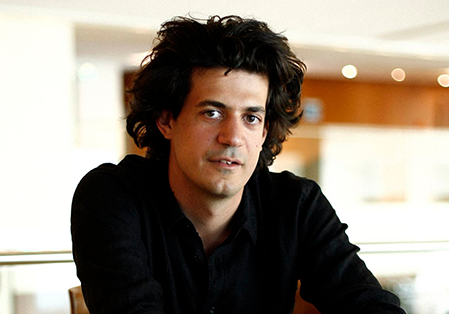
Costis Daskalakis
CSAIL article

Constantinos (“Costis”) Daskalakis, an MIT professor and CSAIL principal investigator, has won the 2018 ACM Grace Murray Hopper Award. Daskalakis was honored for “proving that the computational complexity of finding Nash equilibria is the same as that of finding Brouwer fixed points, a proof since extended to several other equilibrium notions.”

Image
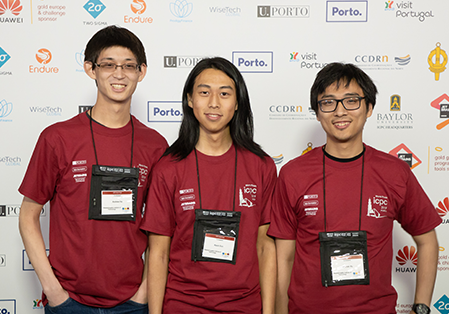
Kevin Sun, Andrew He and Yinzhan Xu (photo credit Bob Smith)
CSAIL article

MIT placed first among all North American teams - and second globally - at the World Finals of the Association for Computing Machinery's 43rd annual International College Programming Contest (ICPC) in Porto, Portugal.

The world's most prestigious programming contest, ICPC involves 300,000 students from two thousand universities and nearly 100 countries, with only the top 128 teams earning a spot in the finals.