A novel system developed by MIT researchers automatically “learns” how to schedule data-processing operations across thousands of servers — a task traditionally reserved for imprecise, human-designed algorithms. Doing so could help today’s power-hungry data centers run far more efficiently.
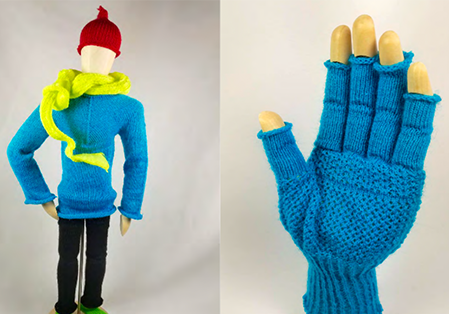
From 3-D printing to 3-D knitting, CSAIL researchers venture to streamline design technology through AI. The computer-aided design tool allows for customization of patterns based on user preferences with minimal programming knowledge needed.
Researchers from MIT’s Computer Science and Artificial Intelligence Laboratory (CSAIL) are working on the problem, and have developed a new system called “Minerva” that allows multiple people to stream video over a single network with minimal buffering and pixelation.
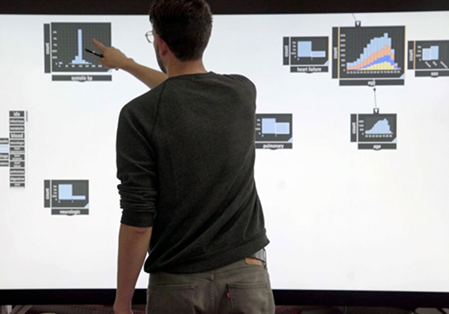
In the Iron Man movies, Tony Stark uses a holographic computer to project 3D data into thin air, manipulate them with his hands, and find fixes to his superhero troubles. In the same vein, researchers from MIT and Brown University have now developed a system for interactive data analytics that runs on touchscreens and lets everyone — not just billionaire tech geniuses — tackle real-world issues.
A team from MIT and IBM has now done exactly that with “GANpaint Studio,” a system that can automatically generate realistic photographic images and edit objects inside them. In addition to helping artists and designers make quick adjustments to visuals, the researchers say the work may help computer scientists identify “fake” images.
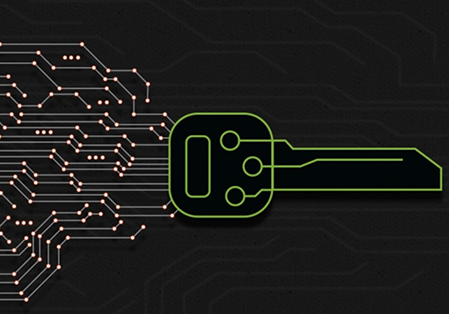
MIT researchers detail a system that, for the first time, automatically generates optimized cryptography code that’s usually written by hand. Deployed in early 2018, the system is now being widely used by Google and other tech firms.
Dina Katabi,the Andrew and Erna Viterbi Professor of Electrical Engineering and Computer Science, has been named as aGreat Immigrantby the Carnegie Corporation of New York. Katabi, who was born in Syria, is among 38 naturalized citizens from 35 countries of origin who are being celebrated for their contributions to American society.
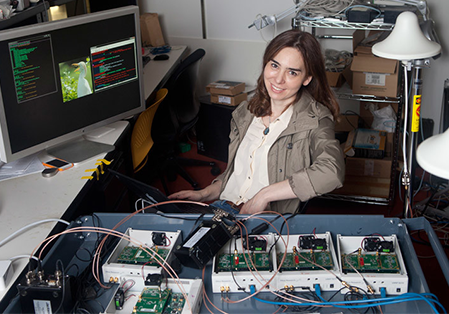
Over the past year MIT CSAIL has worked with Novartis to test a novel technology for passive, contactless monitoring of physiological signals that may be used to monitor clinical trial patients in their homes.
A team from MIT CSAIL has developed a new radix-sorting algorithm called Regions Sort which is up to four times faster than similar algorithms while using half the memory.
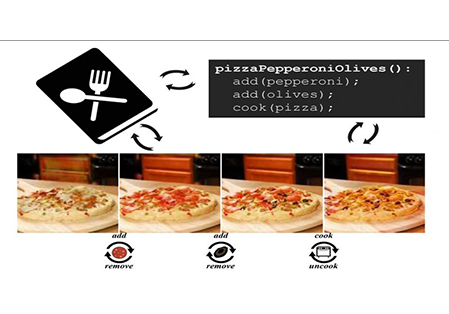
A team of researchers from MIT CSAIL and QCRI have developed a neural network that can look at an image of a pizza, determine the type and distribution of ingredients, and figure out the correct order to layer the pizza before cooking.