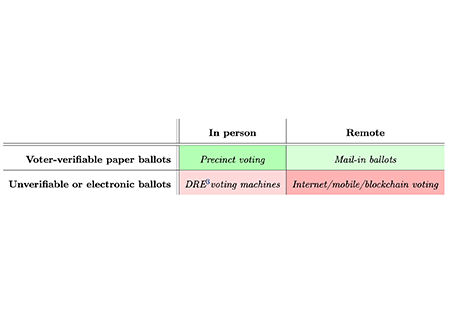
In the middle of a pandemic, it’s not surprising that there have been increasing calls to explore the possibility of conducting elections online. A growing number of tech start-ups have even advocated for using blockchain technology, which they say would boost voter turn-out and improve public trust.
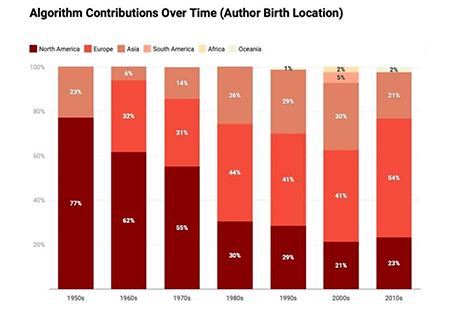
It’s no secret that algorithms run the world, powering everything from Google’s search results to Uber’s car-pool capabilities. But farther under the hood are a more fundamental set of algorithms that underpin computing: if Google PageRank is the engine, these algorithms are the parts it’s built from.
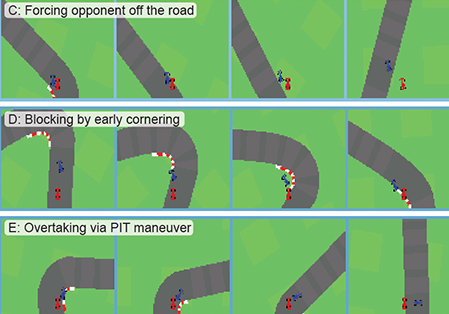
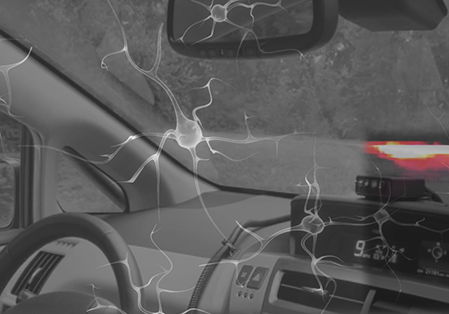
In a new paper, a team led by MIT computer scientists trained a neural network to learn NASCAR-style driving maneuvers purely from looking at a sequence of images taken from a two-person racing game. The network begins without knowing anything about cars, roads, or driving - and yet ultimately becomes able to do complex moves like overtaking an opponent on a turn and even forcing other cars off the road.
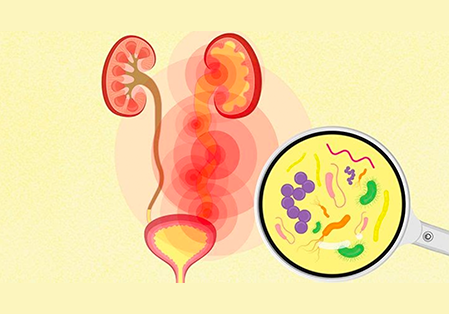
One paradox about antibiotics is that, broadly speaking, the more we use them, the less they continue to work. The Darwinian process of bacteria growing resistant to antibiotics means that, when the drugs don't work, we can no longer treat infections, leading to groups like the World Health Organization warning about our ability to control major public health threats.
Artificial intelligence (AI) can become more efficient and reliable if it is made to mimic biological models. New approaches in AI research are hugely successful in experiments.
Scientists working at the intersection of AI and cancer care need to be more transparent about their methods and publish research that is reproducible, according to a new commentary co-authored by CSAIL's Tamara Broderick.
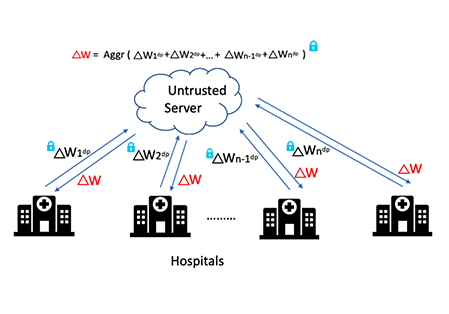
When you see headlines about artificial intelligence (AI) being used to detect health issues, that’s usually thanks to a hospital providing data to researchers. But such systems aren’t as robust as they could be, because such data is usually only taken from one organization.
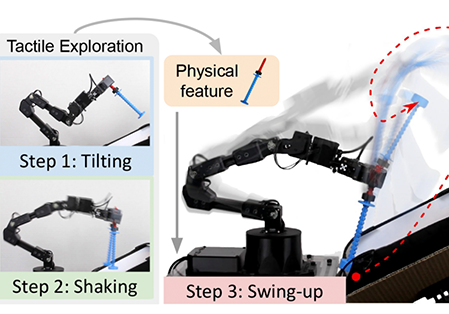
In contrast to the advanced tactile insights of humans, the robots that we’ve spent decades developing don’t even have the tactile skills of toddlers. This matters as systems with so-called “haptic sensors” are increasingly used not just in factories, but stores, offices and even people’s homes.
MIT researchers have developed a wireless, private way to monitor a person’s sleep postures — whether snoozing on their back, stomach, or sides — using reflected radio signals from a small device mounted on a bedroom wall.
When a natural disaster occurs, on-the-ground emergency response teams act quickly to make life-saving decisions. Reducing the response time in such situations is critical to reduce damage impact and save lives. Helpful efforts are being taken to reduce the burden, such as a damage assessment tool by UNDP, though few automated methods exist. In recent work, MIT is creating tools that can automatically analyze images.