Generative artificial intelligence models have left such an indelible impact on digital content creation that it’s getting harder to recall what the internet was like before it. You can call on these AI tools for clever projects such as videos and photos — but their flair for the creative hasn’t quite crossed over into the physical world just yet.
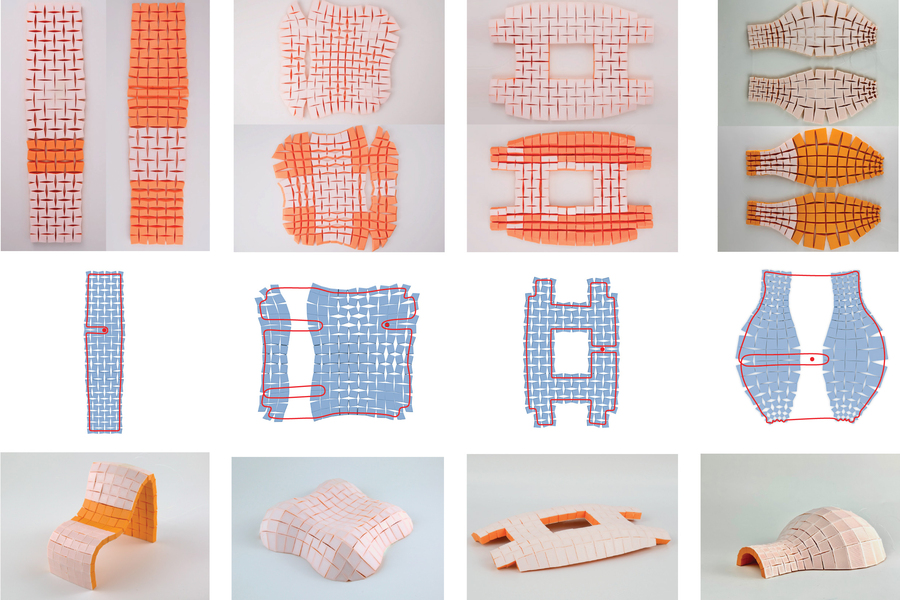
MIT researchers have developed a new method for designing 3D structures that can be transformed from a flat configuration into their curved, fully formed shape with only a single pull of a string.
Whether you’re a scientist brainstorming research ideas or a CEO hoping to automate a task in human resources or finance, you’ll find that artificial intelligence (AI) tools are becoming the assistants you didn’t know you needed. In particular, many professionals are tapping into the talents of semi-autonomous software systems called AI agents, which can call on AI at specific points to solve problems and complete tasks.
Most languages use word position and sentence structure to extract meaning. For example, “The cat sat on the box,” is not the same as “The box was on the cat.” Over a long text, like a financial document or a novel, the syntax of these words likely evolves.
To innovate as a technologist, you need to be a polyglot—fluent in multiple languages of problem-solving, able to synthesize ideas across domains, reframing puzzles to visualize different outcomes, and revealing the questions that have yet to be asked.
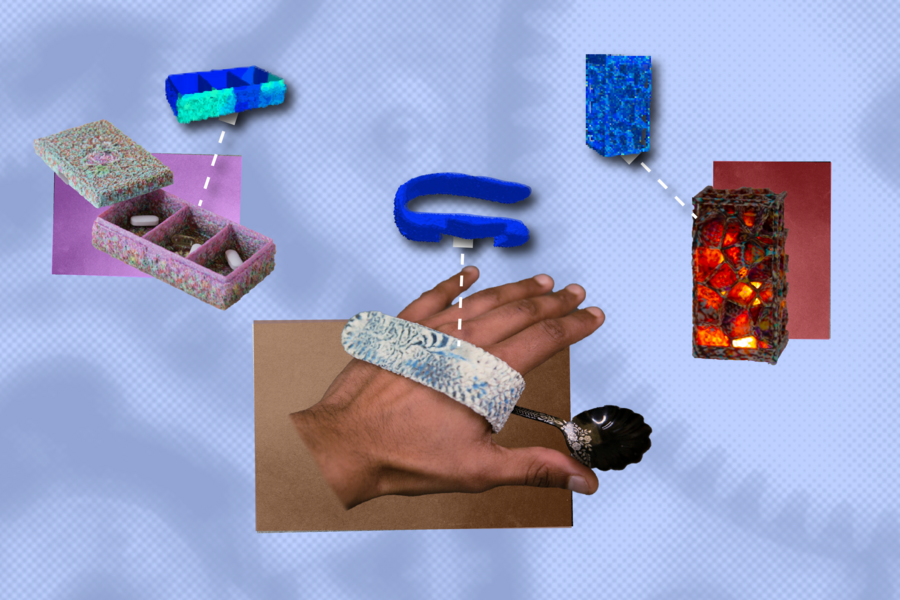
Computer-aided design (CAD) systems are tried-and-true tools used to design many of the physical objects we use each day. But CAD software requires extensive expertise to master, and many tools incorporate such a high level of detail they don’t lend themselves to brainstorming or rapid prototyping.
As language models (LMs) improve at tasks like image generation, trivia questions, and simple math, you might think that human-like reasoning is around the corner. In reality, they still trail us by a wide margin on complex tasks. Try playing Sudoku with one, for instance, where you fill in numbers one through nine in such a way that each appears only once across the columns, rows, and sections of a nine-by-nine grid. Your AI opponent will either fail to fill in boxes on its own or do so inefficiently, though it can verify if you’ve filled yours out correctly.
Even networks long considered “untrainable” can learn effectively with a bit of a helping hand. Researchers at MIT’s Computer Science and Artificial Intelligence Laboratory (CSAIL) have shown that a brief period of alignment between neural networks, a method they call guidance, can dramatically improve the performance of architectures previously thought unsuitable for modern tasks.
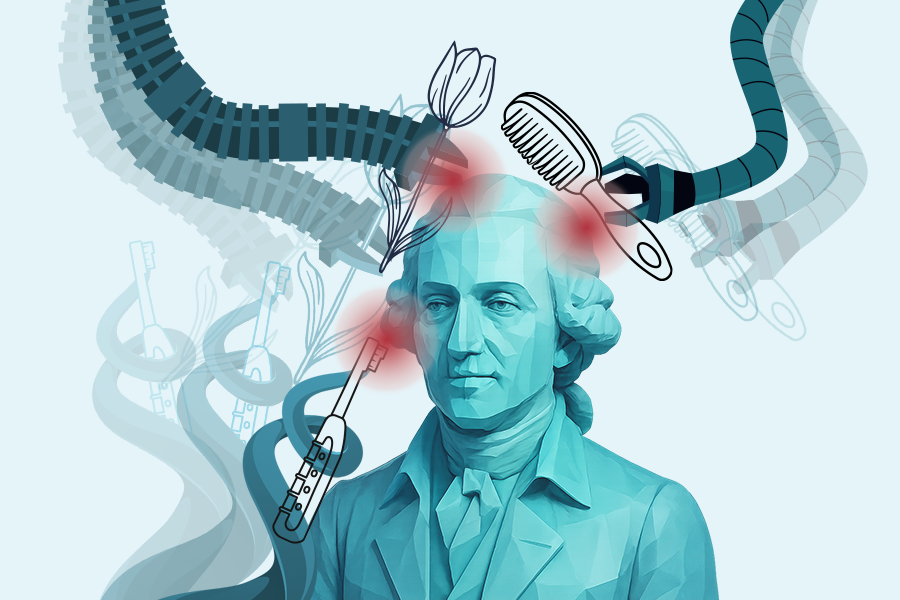
Imagine having a continuum soft robotic arm bend around a bunch of grapes or broccoli, adjusting its grip in real time as it lifts the object. Unlike traditional rigid robots that generally aim to avoid contact with the environment as much as possible and stay far away from humans for safety reasons, this arm senses subtle forces, stretching and flexing in ways that mimic more of the compliance of a human hand. Its every motion is calculated to avoid excessive force while achieving the task efficiently. In MIT Computer Science and Artificial Intelligence Laboratory (CSAIL) and Laboratory for Information and Decisions Systems (LIDS) labs, these seemingly simple movements are the culmination of complex mathematics, careful engineering, and a vision for robots that can safely interact with humans and delicate objects.