Audrey Woods, MIT CSAIL Alliances | May 19, 2026
For MIT Professor Armando Solar-Lezama, one of the most common misunderstandings about AI is the notion that it can be dropped into existing human roles like a plug-and-play replacement.
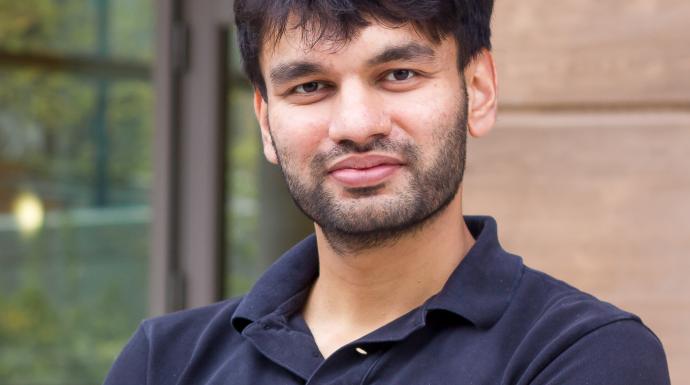
In his dual roles of Associate Director and COO of Massachusetts Institute of Technology Computer Science and AI Laboratory (MIT CSAIL) and a Professor in MIT’s Electrical Engineering and Computer Science (EECS) department, Solar-Lezama understands the limitations of AI.
The problem, he explains in conversation with CSAIL Alliances, is that human organizations, institutions, and workflows have evolved over time to compensate for specific human shortcomings like forgetfulness, fatigue, bias, inconsistency, etc. The checks and balances we've built, from peer review to management hierarchies to compliance processes, exist because humans fail in predictable ways. "So if you just want to go and replace every human with an AI, then things are not going to work. Because, first of all, you're going to be underusing the AI because it's way better than the human at many things the human was doing. But you're also going to be open to all of these different failure modes that the humans didn't have and that suddenly become very significant."
In other words, a strategy of one-to-one replacement risks a double failure, in which the AI’s superhuman capabilities are wasted, constrained by a human-shaped role, and new AI-specific vulnerabilities are introduced into a system that was never designed to catch them.
AI will automate certain types of work, like “basically any task where you can easily check the output and say, 'yes, this is correct output,' or, 'no, you did it wrong, that's not how you do it. You can have pretty high confidence that, if not today, a few years from now [that work] will be completely automated." But critically, “that is not most tasks. And I would argue that there are very few professions where most of the tasks or all the tasks look like that."
For Professor Solar-Lezama, some of the narratives rising around AI carry real-world consequences that could create long-term economic damage. "If people believe that you can just give an AI coding tool, have it just go do everything by itself, and you can go and fire all your programmers, they might be tempted to actually go and do it and fire all their programmers, even before the technology can actually do that."
The more productive framing, Professor Solar-Lezama argues, is reorganization. "There's going to be a lot of reorganization that is going to have to happen to really take advantage of the automation that is possible.” That means redesigning workflows around what AI does well—tasks where output can be easily checked—while keeping humans responsible for the judgment calls, architectural decisions, design choices, and long-term planning.
A recent Harvard Business Review article on “Why Companies That Choose AI Augmentation Over Automation May Win in the Long Run” argues that while AI automation offers immediate cost savings through headcount reduction, an augmentation strategy which focuses on empowering employees to perform higher-value work is the superior long-term play. Drawing on research across psychology and economics, the authors explain that automation often triggers a "six-phase decline" characterized by eroded trust, decreased well-being, and the proliferation of low-quality "workslop." In contrast, augmentation follows a positive productivity J-curve; though it requires deeper upfront investment in training and workflow redesign, it ultimately fosters innovation, strengthens talent pipelines, and creates a durable competitive advantage by treating human potential as an asset to be amplified rather than a cost to be minimized.
Professor Solar-Lezama underscores how having a skilled human in the loop keeps AI output more reliable. "It's like saying draft me an email or draft a memo, but if the memo is in English and you can't proofread English, you're not going to be too good at assessing whether that memo gets your message across in the way you hope it gets across, because you're missing the ability to have the oversight." In core subjective areas like design and architecture, the expertise of a person also prevents expensive and time-intensive mistakes. “If you go and design a piece of software infrastructure, you might not realize you have the wrong design until a year later when you have to add a new feature and you realize that because of the way your software is structured, it will require a complete rewrite of the software to add this feature that, if you had the right design, would have been a simple thing to do. Things like building scalable systems… these are the sorts of things that are hard to train into the models." He adds, "It's still a pretty cognitively demanding task to go and build reliable software, even with all of these tools. It's not just go watch movies while the model does the work. But it's different work. It's different from what it was even six months ago."
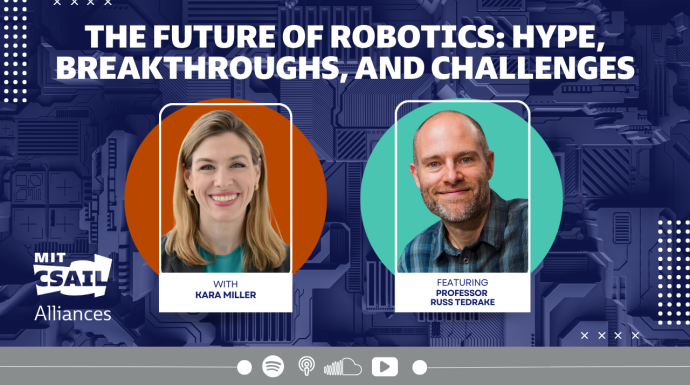
Professor Armando Solar-Lezama is the Associate Director and COO of MIT CSAIL and a Professor in MIT EECS. Listen to his conversation with Kara Miller on the MIT CSAIL Alliances podcast for more.