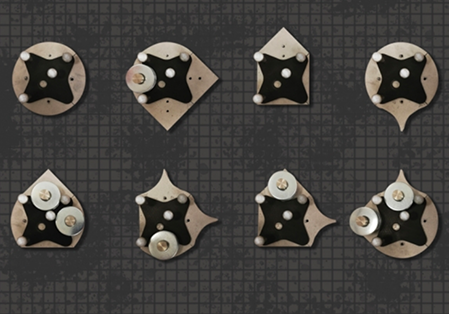
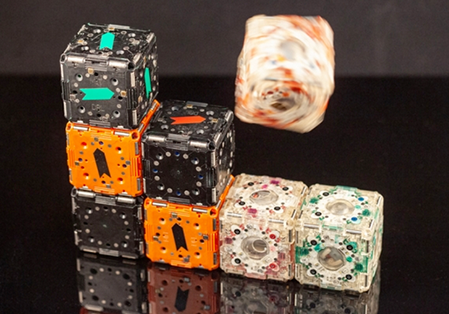
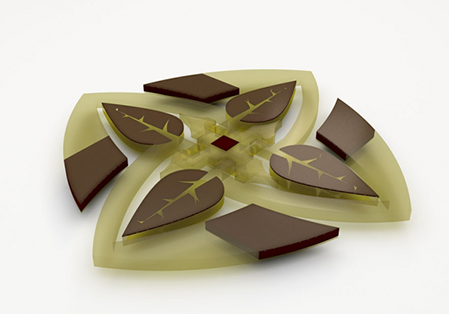
Swarms of simple, interacting robots have the potential to unlock stealthy abilities for accomplishing complex tasks. Getting these robots to achieve a true-hive like mind of coordination, though, has still proved to be a hurdle.
If you’ve ever seen a self-driving car in the wild, you might wonder about that spinning cylinder on top of it.
It’s a “lidar sensor,” and it’s what allows the car to navigate the world. By sending out pulses of infrared light and measuring the time it takes for them to bounce off objects, the sensor creates a “point cloud” that builds a 3D snapshot of the car’s surroundings.
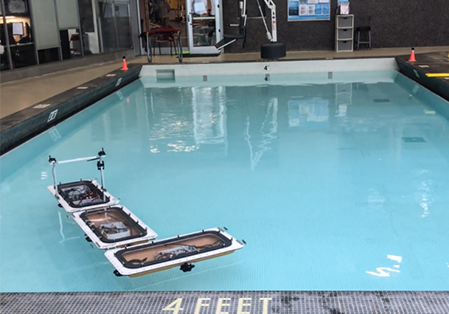
MIT’s fleet of robotic boats has been updated with new capabilities to “shapeshift,” by autonomously disconnecting and reassembling into a variety of configurations, to form floating structures in Amsterdam’s many canals.
Continue the conversation of AI and the Future of Work
After the AI and the Future of Work Congress on Nov 21, keep the conversation going! Cap off your time on campus by participating in the AI & Work of the Future Unconference on Friday, November 22.
Join fellow participants and bring your biggest questions and most innovative ideas to this half-day event. No pre-determined topics, keynotes, or panels - we’ll amplify and facilitate the AI and future of work-driven conversations that matter most to you and your organization.
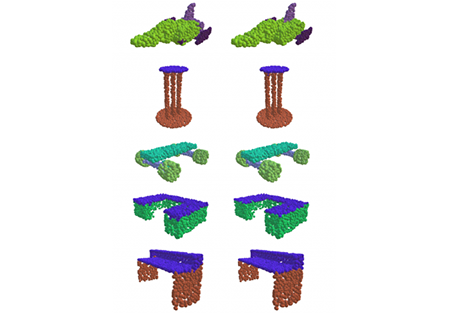
An automated system developed by MIT researchers designs and 3-D prints complex robotic parts called actuators that are optimized according to an enormous number of specifications. In short, the system does automatically what is virtually impossible for humans to do by hand.
A team from MIT CSAIL has developed a new radix-sorting algorithm called Regions Sort which is up to four times faster than similar algorithms while using half the memory.