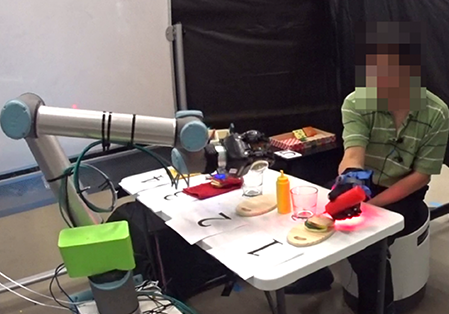
Researchers at MIT’s Computer Science and Artificial Intelligence Laboratory (CSAIL) have developed a new framework called CommPlan that, rather than telling robots exactly when and how to communicate, gives them a few high-level principles for good etiquette and then leaves it to the robot to make decisions that would allow it to finish the task as efficiently as possible.
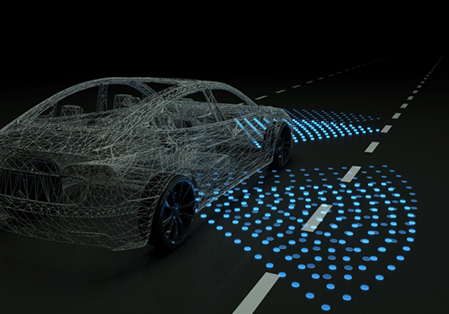
A simulation system invented at MIT to train driverless cars creates a photorealistic world with infinite steering possibilities, helping the cars learn to navigate a host of worse-case scenarios before cruising down real streets.
Training interactive robots may one day be an easy job for everyone, even those without programming expertise. Roboticists are developing automated robots that can learn new tasks solely by observing humans. At home, you might someday show a domestic robot how to do routine chores. In the workplace, you could train robots like new employees, showing them how to perform many duties.
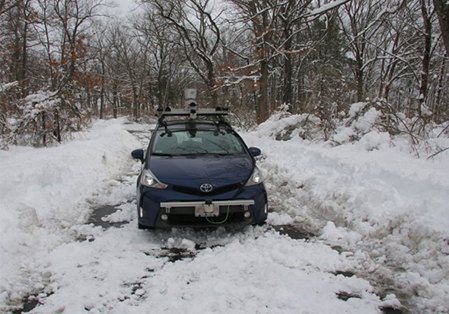
A team from MIT’s Computer Science and Artificial Intelligence Laboratory (CSAIL) has developed a new system that uses an existing technology called ground-penetrating radar (GPR) to send electromagnetic pulses underground that measure the area’s specific combination of soil, rocks, and roots.
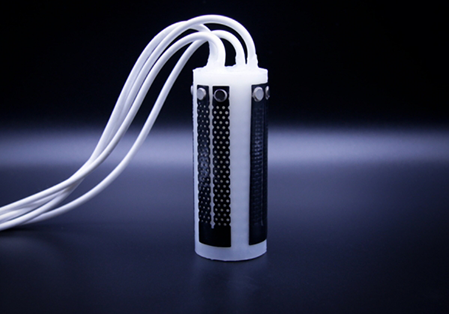
For the first time, MIT researchers have enabled a soft robotic arm to understand its configuration in 3D space, by leveraging only motion and position data from its own “sensorized” skin.
Given that our smartphones have largely become appendages over the last decade, it’s hard to imagine that ten years ago there was no Instagram, Uber, TikTok or Tinder. The ways we move, shop, eat and communicate continue to evolve thanks to the technologies we use. It can be easy to forget how quickly things have changed - so let’s turn back the clocks and reminisce about some of the computing breakthroughs that have transformed our lives in the ’10s.
The road to commencement is a long one, especially for graduate students whose degree programs may take upwards of six years. There are many moments when focus may be lost and excitement may dwindle. Faculty mentors can play a key role in helping students persevere.
MIT researchers have developed a bot equipped with artificial intelligence that can beat human players in tricky online multiplayer games where player roles and motives are kept secret.