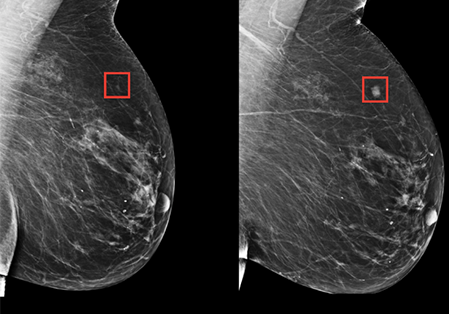
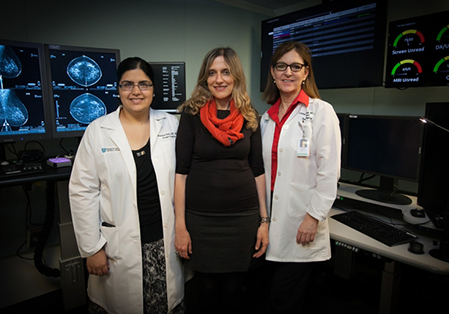
A team from MIT’s Computer Science and Artificial Intelligence Laboratory (CSAIL) and Massachusetts General Hospital (MGH) has created a new deep learning model that can predict from a mammogram if a patient is likely to develop breast cancer in the future. They trained their model on mammograms and known outcomes from over 60,000 patients treated at MGH, and their model learned the subtle patterns in breast tissue that are precursors to malignancy.
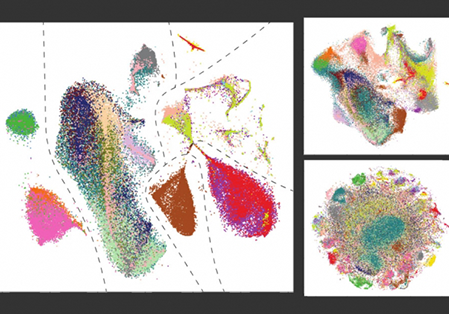
A new algorithm developed by MIT researchers takes cues from panoramic photography to merge massive, diverse cell datasets into a single source that can be used for medical and biological studies.
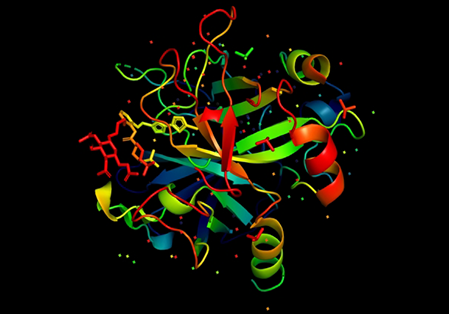
A machine-learning model from MIT researchers computationally breaks down how segments of amino acid chains determine a protein’s function, which could help researchers design and test new proteins for drug development or biological research.
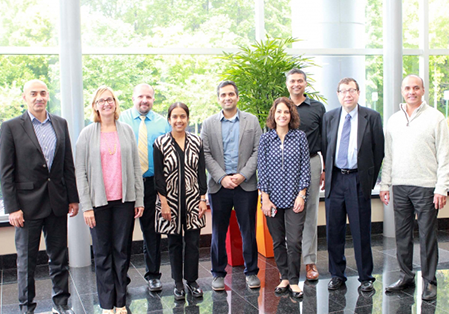
MIT’s Computer Science and Artificial Intelligence Laboratory (CSAIL) held a special workshop with Microsoft Research to explore key challenges in creating trustworthy and robust artificial intelligence (AI) systems. The effort focused on addressing concerns about the trustworthiness of AI systems, including rising concerns with the safety, fairness, and transparency of the technologies.
Four CSAIL faculty were named among the top 100 global leaders in artificial intelligence for health, according to a new report developed by a top technology think-tank.
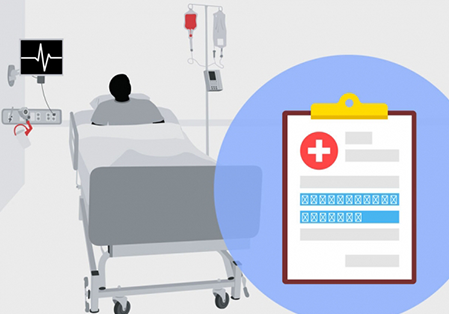
Neural network assimilates multiple types of health data to help doctors make decisions with incomplete information.
MIT researchers have developed a model that can assimilate multiple types of a patient’s health data to help doctors make decisions with incomplete information.
MIT researchers have built a system that takes a step toward fully automated smart home by identifying occupants, even when they’re not carrying mobile devices. The system, called Duet, uses reflected wireless signals to localize individuals.
Investigating inside the human body often requires cutting open a patient or swallowing long tubes with built-in cameras. But what if physicians could get a better glimpse in a less expensive, invasive, and time-consuming manner?
Researchers from MIT and Massachusetts General Hospital have developed an automated model that assesses dense breast tissue in mammograms — which is an independent risk factor for breast cancer — as reliably as expert radiologists.