Data privacy comes with a cost. There are security techniques that protect sensitive user data, like customer addresses, from attackers who may attempt to extract them from AI models — but they often make those models less accurate.
The process of discovering molecules that have the properties needed to create new medicines and materials is cumbersome and expensive, consuming vast computational resources and months of human labor to narrow down the enormous space of potential candidates.
Bar graphs and other charts provide a simple way to communicate data, but are, by definition, difficult to translate for readers who are blind or low-vision.
A hospital that wants to use a cloud computing service to perform artificial intelligence data analysis on sensitive patient records needs a guarantee those data will remain private during computation. Homomorphic encryption is a special type of security scheme that can provide this assurance.
While early language models could only process text, contemporary large language models now perform highly diverse tasks on different types of data. For instance, LLMs can understand many languages, generate computer code, solve math problems, or answer questions about images and audio.
Should you grab your umbrella before you walk out the door? Checking the weather forecast beforehand will only be helpful if that forecast is accurate.
A particular set of probabilistic inference algorithms common in robotics involve Sequential Monte Carlo methods, also known as “particle filtering,” which approximates using repeated random sampling. (“Particle,” in this context, refers to individual samples.) Traditional particle filtering struggles with providing accurate results on complex distributions, giving rise to advanced algorithms such as hybrid particle filtering.
The neural network artificial intelligence models used in applications like medical image processing and speech recognition perform operations on hugely complex data structures that require an enormous amount of computation to process. This is one reason deep-learning models consume so much energy.
If you’ve watched cartoons like Tom and Jerry, you’ll recognize a common theme: An elusive target avoids his formidable adversary. This game of “cat-and-mouse” — whether literal or otherwise — involves pursuing something that ever-so-narrowly escapes you at each try.
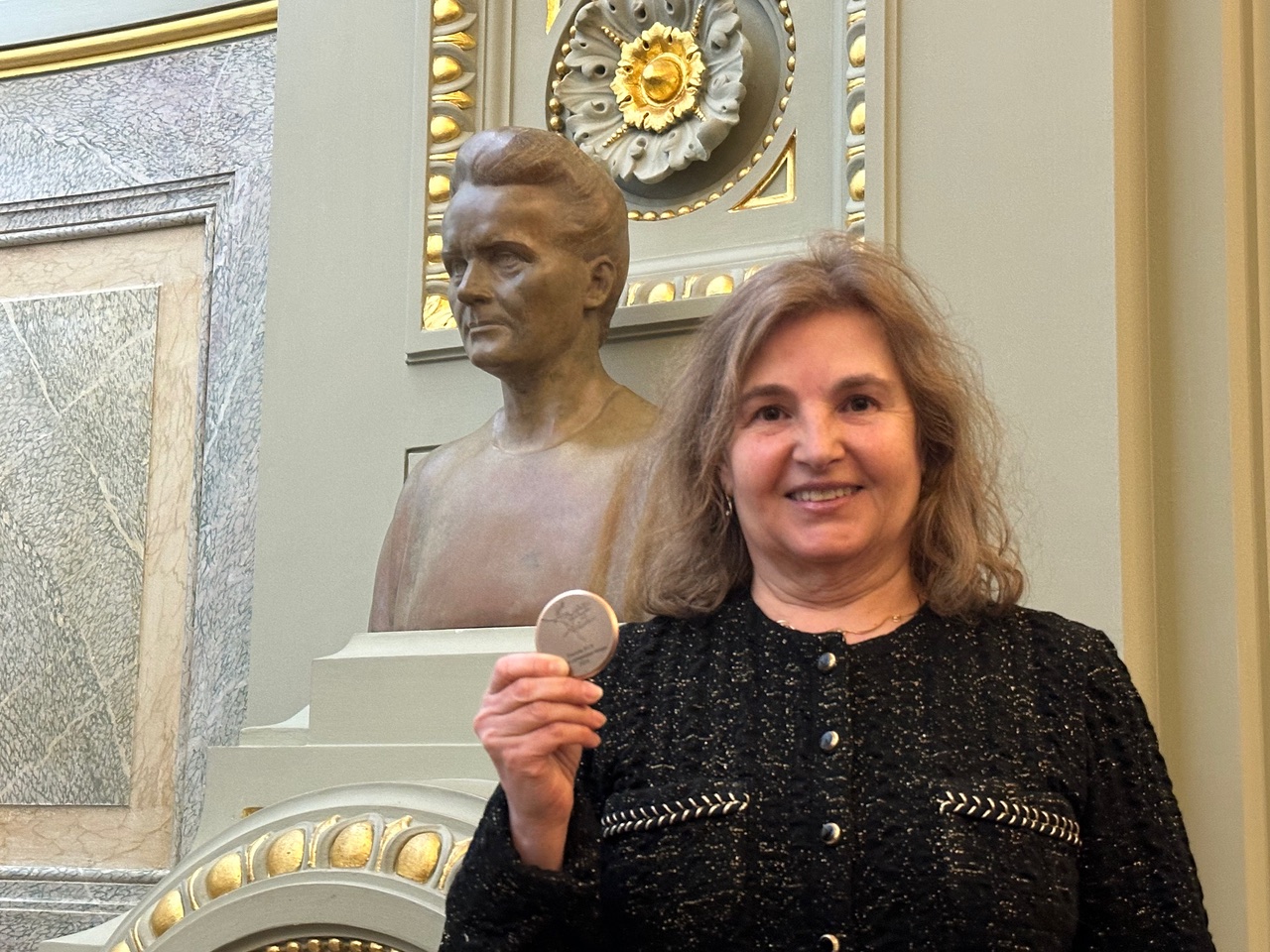
Daniela Rus, a distinguished computer scientist and professor at the Massachusetts Institute of Technology (MIT), has been honored with induction into the prestigious Académie Nationale de Médecine (ANM) as a foreign member on January 7, 2025. As the Director of MIT's Computer Science and Artificial Intelligence Laboratory (CSAIL), Daniela leads over 1,700 researchers in pioneering innovations to advance computing and improve global well-being.