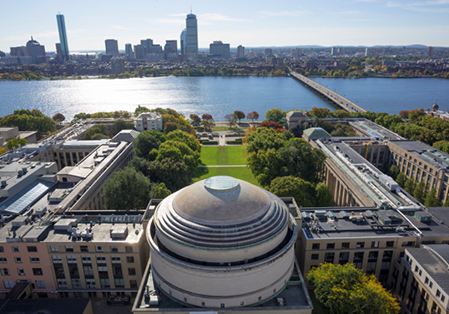
MIT and the US Air Force have signed an agreement to launch a new program designed to make fundamental advances in artificial intelligence that could improve Air Force operations while also addressing broader societal needs.
Technology as a vector for positive change | Technology for a better world
CSAIL recently established the TEDxMIT series. The TEDxMIT events will feature talks about important and impactful ideas by members of the broader MIT community.
This event is organized by Daniela Rus and John Werner, in collaboration with a team of undergraduate students led by Stephanie Fu and Rucha Keklar.
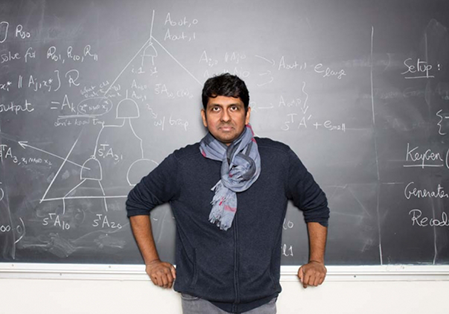
MIT CSAIL unsealed a special time capsule from 1999 after a self-taught programmer Belgium solved a puzzle devised by MIT professor and famed cryptographer Ron Rivest.
MIT’s Computer Science and Artificial Intelligence Laboratory (CSAIL) held a special workshop with Microsoft Research to explore key challenges in creating trustworthy and robust artificial intelligence (AI) systems. The effort focused on addressing concerns about the trustworthiness of AI systems, including rising concerns with the safety, fairness, and transparency of the technologies.
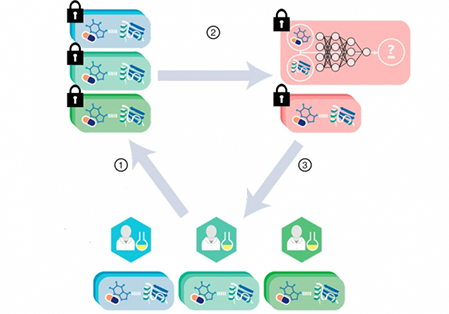
MIT researchers have developed a cryptographic system that could help neural networks identify promising drug candidates in massive pharmacological datasets, while keeping the data private.
Splinter uses and extends a new cryptographic primitive called Function Secret Sharing (FSS) that makes it up to an order of magnitude more efficient than prior systems based on Private Information Retrieval and garbled circuits.