Tonya Hall speaks with Dr. Una-May O'Reilly, MIT IBM Watson AI lab, to learn more about the current status of artificial adversarial intelligence and the strengths of adversarial dynamics over model-based malware detectors.
A team led by MIT researchers and including experts from many institutions is developing a system that augments “manual” contact tracing by public health officials, while preserving the privacy of all individuals.
New privacy laws like Europe’s General Data Protection Regulation (GDPR) and the California Consumer Privacy Act (CCPA) have spawned a new industry of companies and platforms advertising that they can anonymize your data and be compliant with the law.
Solar-Lezama has received a $10 million NSF Expeditions in Computing grant for his work on demonstrating that the combination of deep learning and symbolic reasoning can lead to new learning techniques that can better incorporate prior knowledge and produce interpretable models.
According to MIT CSAIL's Dr. Amar Gupta, whose work concentrates on telemedicine, there are currently many barriers to making health care better, safer, and more affordable for everyone, despite government claims that electronic health records would revolutionize the system.
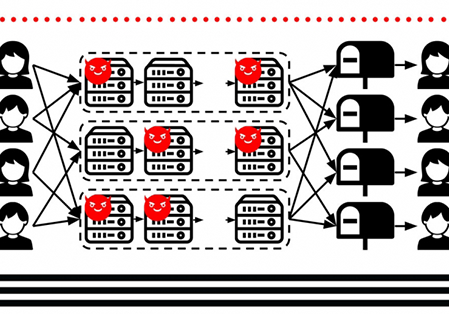
MIT researchers have designed a scalable system that secures the metadata — such as who’s corresponding and when — of millions of users in communications networks, to help protect the information against possible state-level surveillance.
MIT startup PatternEx starts with the assumption that algorithms can’t protect a system on their own. The company has developed a closed loop approach whereby machine-learning models flag possible attacks and human experts provide feedback. The feedback is then incorporated into the models, improving their ability to flag only the activity analysts care about in the future.
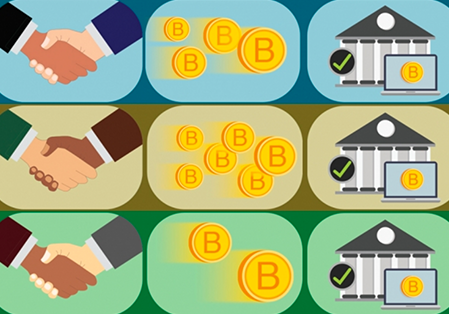
“It’s important to have balanced, high-throughput routing in PCNs to ensure the money that users put into joint accounts is used efficiently,” says first author Vibhaalakshmi Sivaraman, a graduate student in the Computer Science and Artificial Intelligence Laboratory (CSAIL).