This September, MIT Hacking Medicine is hosting the BioxAI Pitch Event. The event will be an opportunity to bring together budding entrepreneurs from various MIT departments, namely PhD students and postdocs, applying ML/AI to biological questions, with a focus on protein biology/drug discovery. For example, early stage founders will pitch for co-founders (max. 2min). Founders and individuals who want to join a team will likewise pitch themselves. This will be an opportunity to learn from guests within and outside MIT, including NSF, CSAIL Alliances, and the Martin Trust Center.
Are you a CSAIL entrepreneur? Are you curious about the resources that CSAIL Alliances, as well as the rest of the MIT Ecosystem can offer you? Sign up for Office Hours using the form to ask Christiana Kalfas, Sr.
Computer graphics and geometry processing research provide the tools needed to simulate physical phenomena like fire and flames, aiding the creation of visual effects in video games and movies as well as the fabrication of complex geometric shapes using tools like 3D printing.
On a research cruise around Hawaii in 2018, Yuening Zhang SM ’19, PhD ’24 saw how difficult it was to keep a tight ship. The careful coordination required to map underwater terrain could sometimes led to a stressful environment for team members, who might have different understandings of which tasks must be completed in spontaneously changing conditions. During these trips, Zhang considered how a robotic companion could have helped her and her crewmates achieve their goals more efficiently.
As artificial intelligence agents become more advanced, it could become increasingly difficult to distinguish between AI-powered users and real humans on the internet. In a new white paper, researchers from MIT, OpenAI, Microsoft, and other tech companies and academic institutions propose the use of personhood credentials, a verification technique that enables someone to prove they are a real human online, while preserving their privacy.
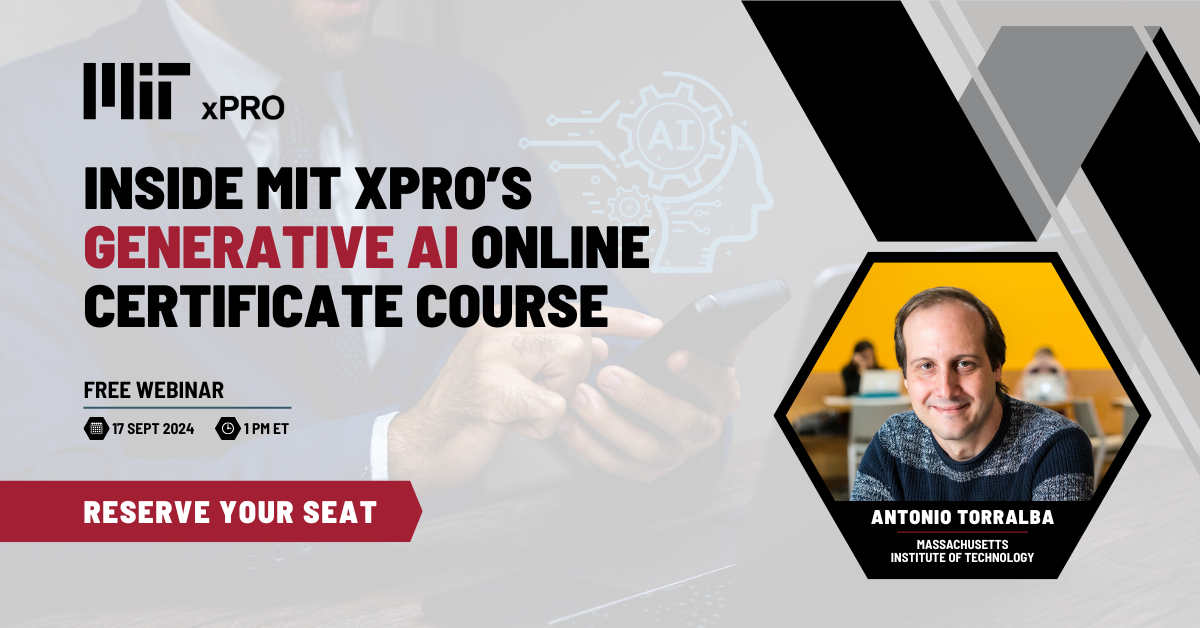
Generative AI represents a seismic shift in the way we approach creative tasks. A comprehensive understanding of these technologies enables organizations to leverage the power of the technology to increase productivity, improve customer service, enhance user experiences, develop content, create synthetic data, enable new discoveries, and so much more!
To ensure that professionals have continual training and access to the latest knowledge, MIT xPRO has created the six-week online course: Driving Innovation with Generative AI.
Ask a large language model (LLM) like GPT-4 to smell a rain-soaked campsite, and it’ll politely decline. Ask the same system to describe that scent to you, and it’ll wax poetic about “an air thick with anticipation" and “a scent that is both fresh and earthy," despite having neither prior experience with rain nor a nose to help it make such observations.
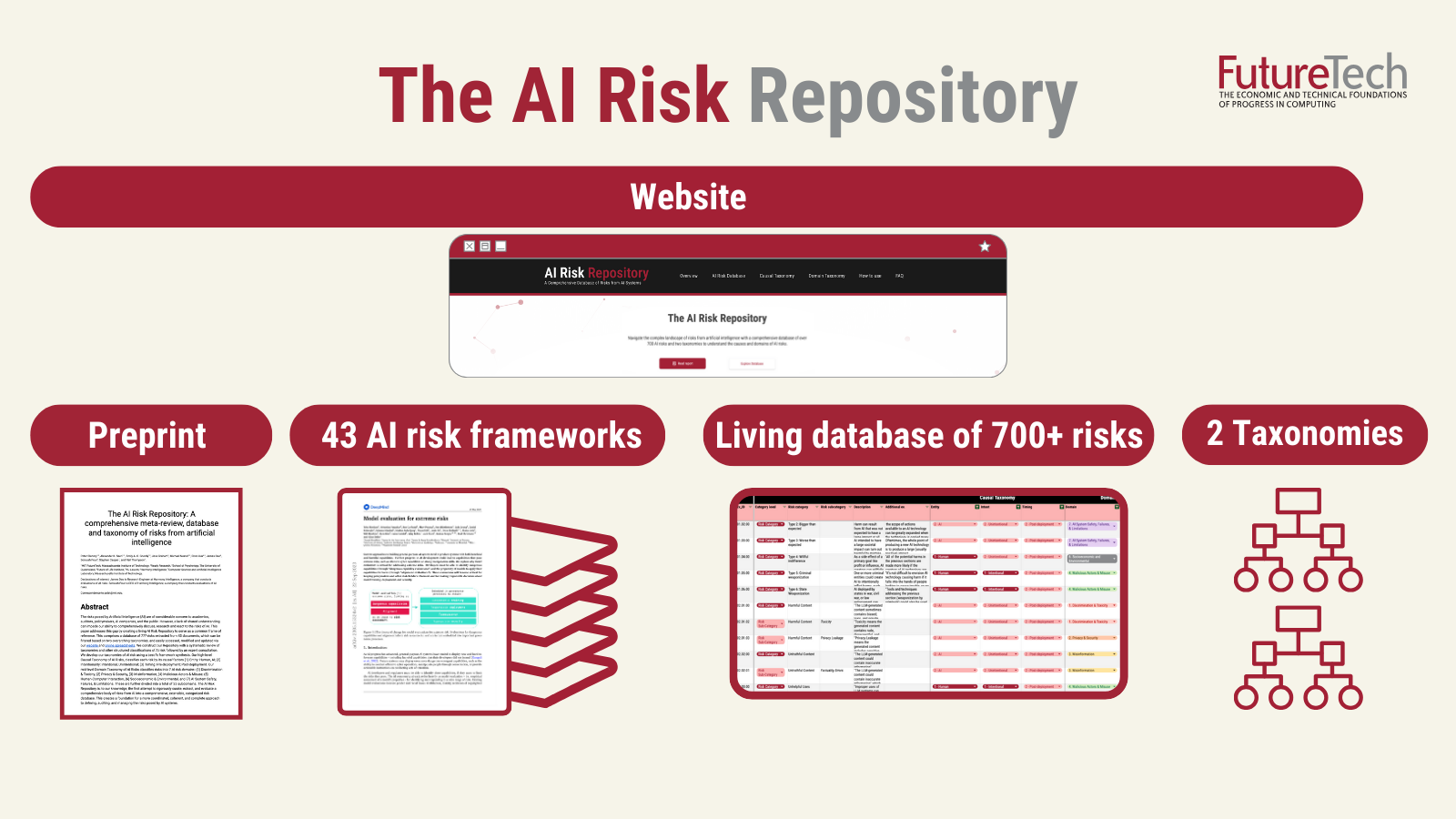
As organizations rush to implement artificial intelligence (AI), a new analysis of AI-related risks finds significant gaps in our understanding, highlighting an urgent need for a more comprehensive approach.