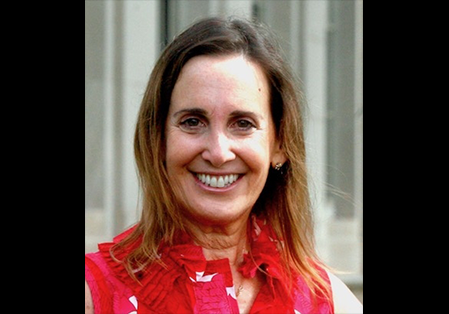
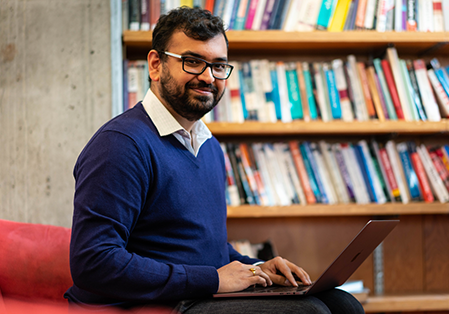
MIT professor Bonnie Berger was elected to the National Academy of Sciences (AAAS) for her “distinguished and continuing achievements in original research.” She joins a new class of 146 members, including 26 internationally.
With various physical distancing guidelines in place throughout the world as a means to curb the spread of Covid-19, the internet has experienced a dramatic spike in overall traffic.
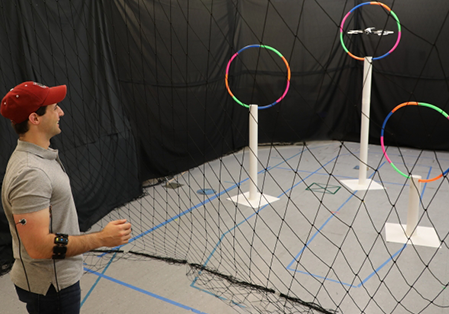
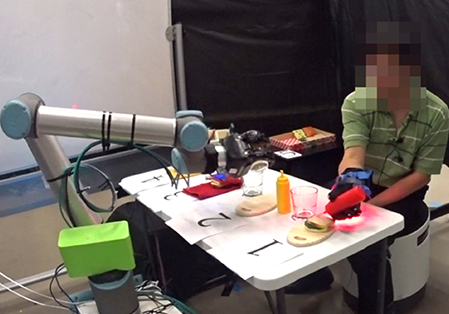
A team from CSAIL came up with a method that dials us closer to more seamless human-robot collaboration. The system, called “Conduct-A-Bot,” uses human muscle signals from wearable sensors to pilot a robot’s movement.
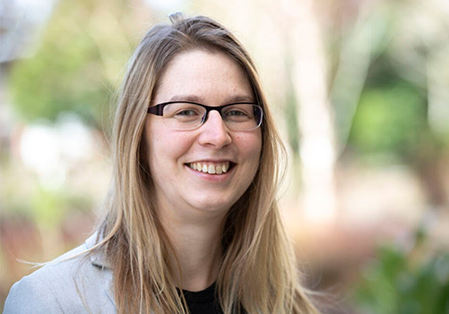
Stefanie Mueller leads the HCI Engineering Group at CSAIL. In her work, she develops novel hardware and software systems that advance personal fabrication technologies.
Arvind Satyanarayan, who leads the MIT Visualization Group, uses visualization to study intelligence augmentation, specifically how software systems can help amplify our cognition and creativity, while respecting our agency.
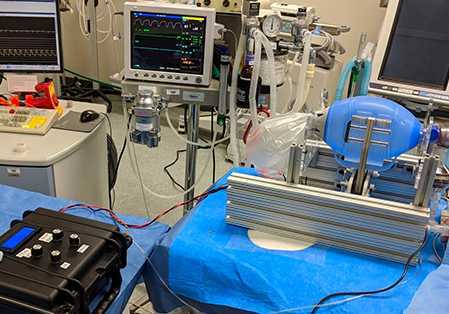
It can be hard to keep track of all the numbers, statistics, and charts swirling around the internet -- we’re inundated with information that can be rapidly disseminated and dissected. To carve through some of the sludge, here’s a selected highlight of recent computer science related efforts to fight COVID-19.
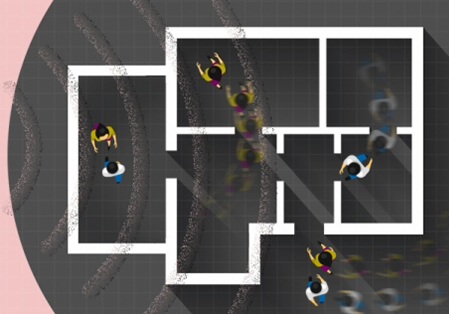
Aclinical team in Boston has reported being able to monitor a COVID-19 patient remotely, thanks to a device developed at CSAIL that can monitor a patient’s breathing, movement and sleep patterns using wireless signals.
New privacy laws like Europe’s General Data Protection Regulation (GDPR) and the California Consumer Privacy Act (CCPA) have spawned a new industry of companies and platforms advertising that they can anonymize your data and be compliant with the law.
Researchers at MIT’s Computer Science and Artificial Intelligence Laboratory (CSAIL) have developed a new framework called CommPlan that, rather than telling robots exactly when and how to communicate, gives them a few high-level principles for good etiquette and then leaves it to the robot to make decisions that would allow it to finish the task as efficiently as possible.
A company, founded by Marilyn Matz SM ’80 and CSAIL's Michael Stonebraker, helps pharmaceutical companies, research institutes, and biotech companies turn data into insights.