Even networks long considered “untrainable” can learn effectively with a bit of a helping hand. Researchers at MIT’s Computer Science and Artificial Intelligence Laboratory (CSAIL) have shown that a brief period of alignment between neural networks, a method they call guidance, can dramatically improve the performance of architectures previously thought unsuitable for modern tasks.
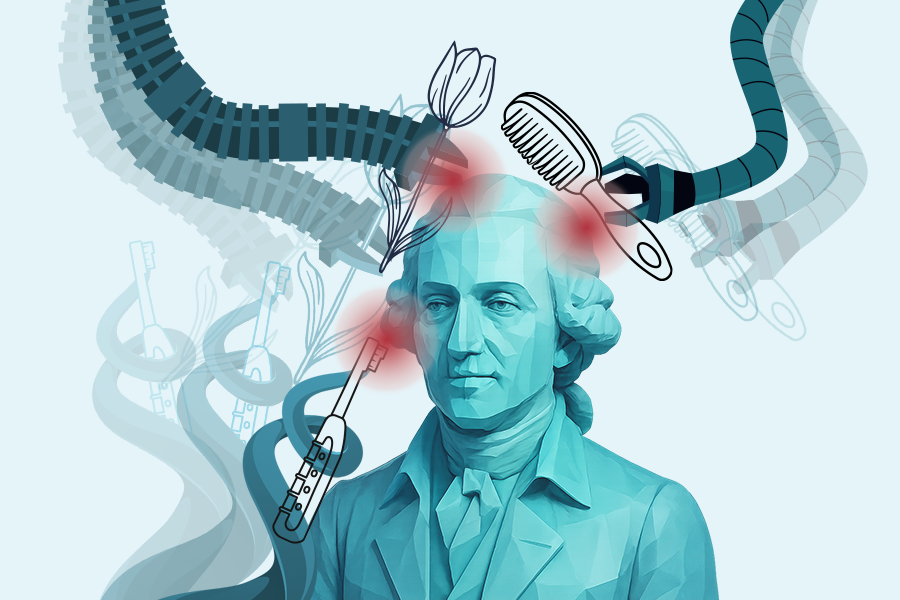
Imagine having a continuum soft robotic arm bend around a bunch of grapes or broccoli, adjusting its grip in real time as it lifts the object. Unlike traditional rigid robots that generally aim to avoid contact with the environment as much as possible and stay far away from humans for safety reasons, this arm senses subtle forces, stretching and flexing in ways that mimic more of the compliance of a human hand. Its every motion is calculated to avoid excessive force while achieving the task efficiently. In MIT Computer Science and Artificial Intelligence Laboratory (CSAIL) and Laboratory for Information and Decisions Systems (LIDS) labs, these seemingly simple movements are the culmination of complex mathematics, careful engineering, and a vision for robots that can safely interact with humans and delicate objects.
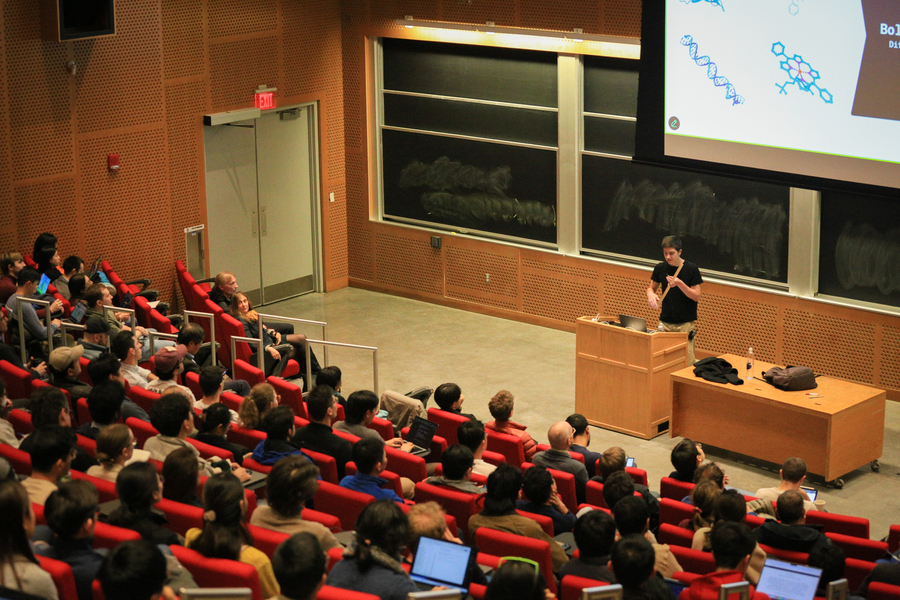
More than 300 people across academia and industry spilled into an auditorium to attend a BoltzGen seminar on Thursday, Oct. 30, hosted by the Abdul Latif Jameel Clinic for Machine Learning in Health (MIT Jameel Clinic). Headlining the event was MIT PhD student and BoltzGen’s first author Hannes Stärk, who had announced BoltzGen just a few days prior.
When the FORTRAN programming language debuted in 1957, it transformed how scientists and engineers programmed computers. Complex calculations could suddenly be expressed in concise, math-like notation using arrays — collections of values that make it easier to describe operations on data. That simple idea evolved into today’s “tensors,” which power many of the world’s most advanced AI and scientific computing systems through modern frameworks like NumPy and PyTorch.