In an MIT classroom, a professor lectures while students diligently write down notes they will reread later to study and internalize key information ahead of an exam.
What can we learn about human intelligence by studying how machines “think?” Can we better understand ourselves if we better understand the artificial intelligence systems that are becoming a more significant part of our everyday lives?
Coding with large language models (LLMs) holds huge promise, but it also exposes some long-standing flaws in software: code that’s messy, hard to change safely, and often opaque about what’s really happening under the hood. Researchers at MIT’s Computer Science and Artificial Intelligence Laboratory (CSAIL) are charting a more “modular” path ahead.
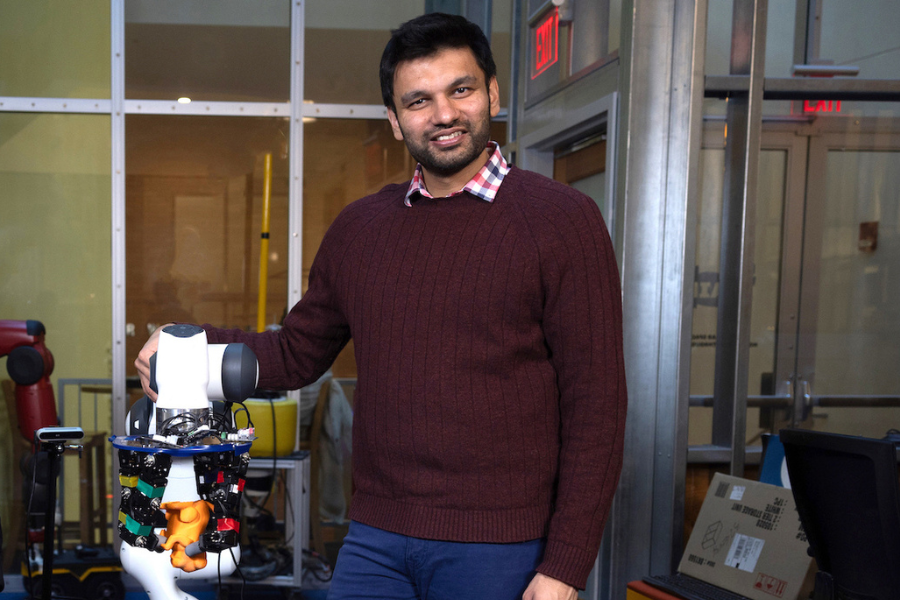
Pulkit Agrawal, MIT EECS Associate Professor and CSAIL principal investigator, has received the Toshio Fukuda Young Professional Award from the IEEE/RSJ International Conference on Intelligent Robots and Systems (IROS) for his work in “robot learning, self-supervised and sim-to-real policy learning, agile locomotion, and dexterous manipulation,” according to the organization.