CSAIL will be launching a new initiative focused on machine learning applications. MachineLearningApplications@CSAIL, or “MLA@CSAIL”, will focus on current challenges in machine learning to prepare industry members for digital transformation in their workplaces.
OpenAI unveiled the largest language model in the world, a text-generating tool called GPT-3 that can write creative fiction, translate legalese into plain English, and answer obscure trivia questions. It’s the latest feat of intelligence achieved by deep learning, a machine learning method patterned after the way neurons in the brain process and store information.
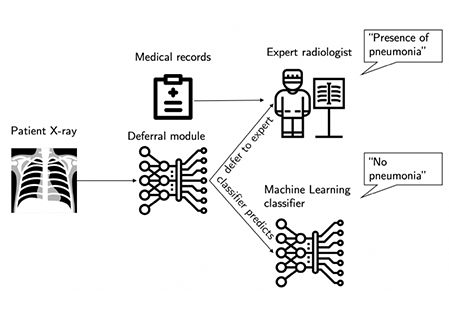
Researchers from CSAIL have developed a machine learning system that can either make a prediction about a task, or defer the decision to an expert. Most importantly, it can adapt when and how often it defers to its human collaborator, based on factors such as its teammate’s availability and level of experience.
Attendees joined CSAIL Alliances for the launch of our newest research initiative, MachineLearningApplications@CSAIL. Many companies are unsure of how, where, or if they should leverage Machine Learning (ML). Awash in data, they are looking to turn that data into intelligence that drives increasingly efficient processes.
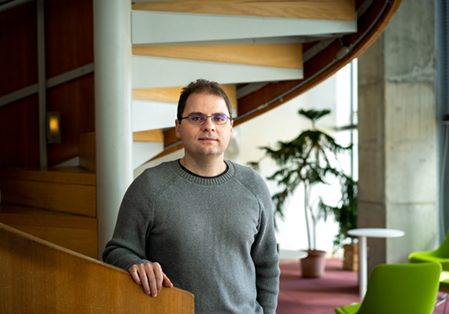
“I want society to truly embrace machine learning,” says Madry, a recently tenured professor in the Department of Electrical Engineering and Computer Science. “To do that, we need to figure out how to train models that people can use safely, reliably, and in a way that they understand.”
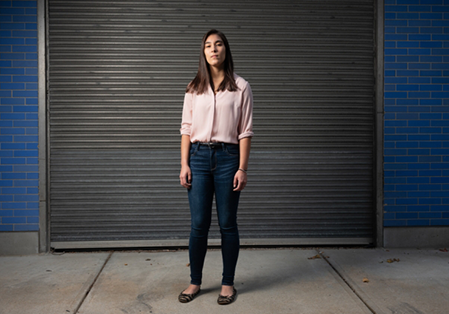
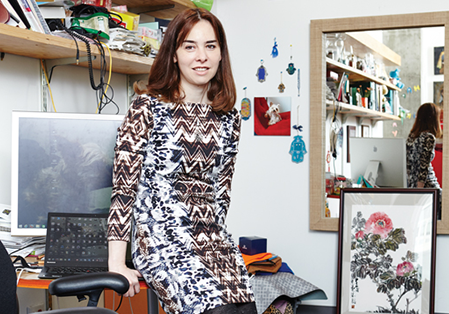
“For me, to be really fulfilled in my work as a scientist, I want to have some tangible impact,” she says.
Carpenter explains that artificial intelligence, which can help compute the combinations of compounds that would be better for a particular drug, can reduce trial-and-error time and ideally quicken the process of designing new medicines.
MIT researchers have developed a model that recovers valuable data lost from images and video that have been “collapsed” into lower dimensions.
The model could be used to recreate video from motion-blurred images, or from new types of cameras that capture a person’s movement around corners but only as vague one-dimensional lines. While more testing is needed, the researchers think this approach could someday could be used to convert 2D medical images into more informative — but more expensive — 3D body scans, which could benefit medical imaging in poorer nations.
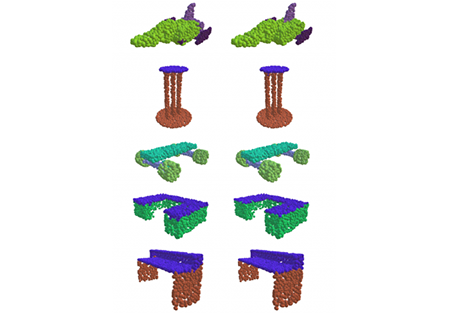
If you’ve ever seen a self-driving car in the wild, you might wonder about that spinning cylinder on top of it.
It’s a “lidar sensor,” and it’s what allows the car to navigate the world. By sending out pulses of infrared light and measuring the time it takes for them to bounce off objects, the sensor creates a “point cloud” that builds a 3D snapshot of the car’s surroundings.
Over the past year MIT CSAIL has worked with Novartis to test a novel technology for passive, contactless monitoring of physiological signals that may be used to monitor clinical trial patients in their homes.