A team led by MIT researchers and including experts from many institutions is developing a system that augments “manual” contact tracing by public health officials, while preserving the privacy of all individuals.
New privacy laws like Europe’s General Data Protection Regulation (GDPR) and the California Consumer Privacy Act (CCPA) have spawned a new industry of companies and platforms advertising that they can anonymize your data and be compliant with the law.
Solar-Lezama has received a $10 million NSF Expeditions in Computing grant for his work on demonstrating that the combination of deep learning and symbolic reasoning can lead to new learning techniques that can better incorporate prior knowledge and produce interpretable models.
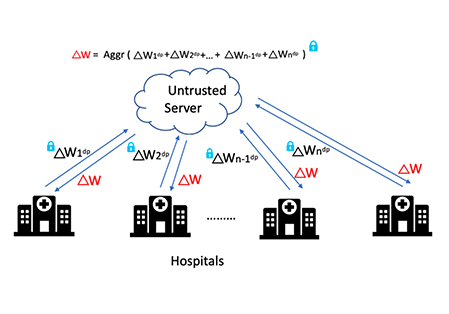
According to MIT CSAIL's Dr. Amar Gupta, whose work concentrates on telemedicine, there are currently many barriers to making health care better, safer, and more affordable for everyone, despite government claims that electronic health records would revolutionize the system.
“It’s important to have balanced, high-throughput routing in PCNs to ensure the money that users put into joint accounts is used efficiently,” says first author Vibhaalakshmi Sivaraman, a graduate student in the Computer Science and Artificial Intelligence Laboratory (CSAIL).
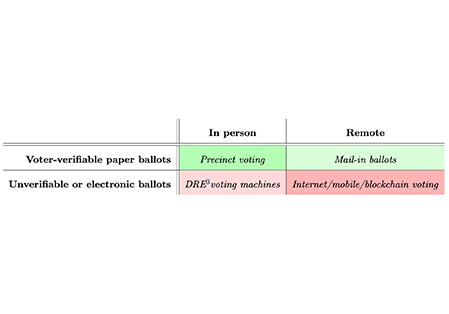
“We all have an interest in increasing access to the ballot, but in order to maintain trust in our elections system, we must assure that voting systems meet the high technical and operation security standards before they are put in the field,” says Weitzner. “We cannot experiment on our democracy.”
“I never thought about the kilowatt-hours I was using. But this hackathon gave me a chance to look at my carbon footprint and find ways to trade a small amount of model accuracy for big energy savings,” says Mohammad Haft-Javaherian.
How the United States adopts AI will have profound ramifications for our immediate security, economic well-being, and position in the world. The Commission’s Interim Report to Congress provides an initial assessment on AI’s relationship to national security, preliminary judgements on areas where the United States can do better, and suggests interim actions the government can take today. The Commission looks forward to hearing from the Harvard community on the types of recommendations that must be considered to prepare for an AI future.