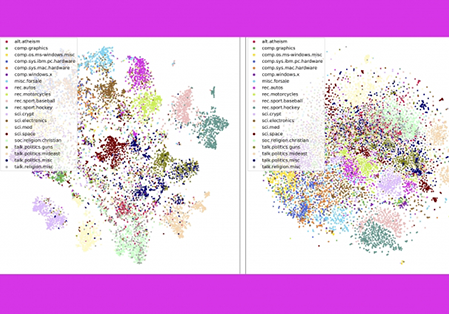
With billions of books, news stories, and documents online, there’s never been a better time to be reading — if you have time to sift through all the options. “There’s a ton of text on the internet,” says Justin Solomon, an assistant professor at MIT. “Anything to help cut through all that material is extremely useful.”
Given that our smartphones have largely become appendages over the last decade, it’s hard to imagine that ten years ago there was no Instagram, Uber, TikTok or Tinder. The ways we move, shop, eat and communicate continue to evolve thanks to the technologies we use. It can be easy to forget how quickly things have changed - so let’s turn back the clocks and reminisce about some of the computing breakthroughs that have transformed our lives in the ’10s.
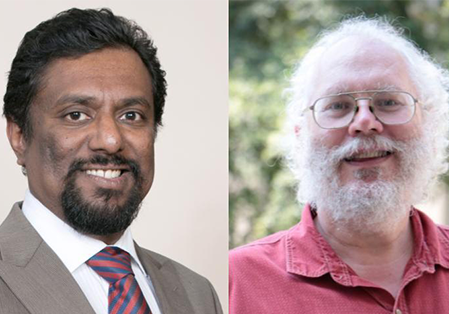
“Saman and Peter are fantastic colleagues and extraordinary computer scientists, which makes it no surprise to me that they would be recognized with the most prestigious member grade of the ACM,” said CSAIL director Daniela Rus. “All of us at the lab are so very proud of Saman and Peter for receiving these esteemed honors.”
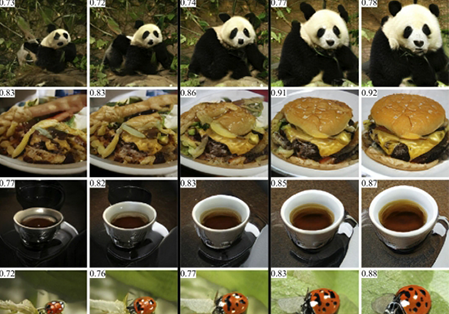
Computer vision models have learned to identify objects in photos so accurately that some can outperform humans on some datasets. But when those same object detectors are turned loose in the real world, their performance noticeably drops, creating reliability concerns for self-driving cars and other safety-critical systems that use machine vision.
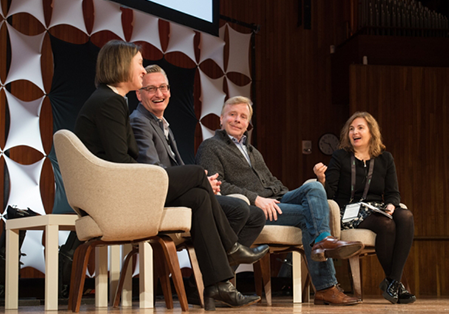
In opening the AI and the Work of the Future Congress, MIT Professor Daniela Rus presented diverging views of how artificial intelligence will impact jobs worldwide.
By automating certain menial tasks, experts think AI is poised to improve human quality of life, boost profits, and create jobs, said Rus, director of the Computer Science and Artificial Intelligence Laboratory (CSAIL) and the Andrew and Erna Viterbi Professor of Electrical Engineering and Computer Science.
Edelman was cited for “for outstanding breakthroughs in high-performance computing, linear algebra, and computational science and for contributions to the Julia programming language.”
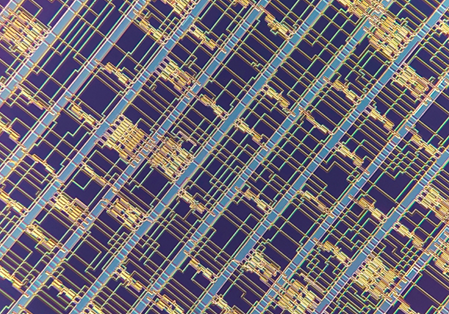
After years of tackling numerous design and manufacturing challenges, MIT researchers have built a modern microprocessor from carbon nanotube transistors, which are widely seen as a faster, greener alternative to their traditional silicon counterparts.