The 4th annual Congress was a virtual event that featured the final report from the MIT Task Force on the Work of the Future. Hosted by MIT's Task Force on Work of the Future, CSAIL, and Initiative on the Digital Economy, this year's Congress highlighted research findings from the MIT Task Force on Work of the Future's final report released in November 2020. Given the rapidly changing environment brought on by Covid-19, this topic is more important and relevant than ever.
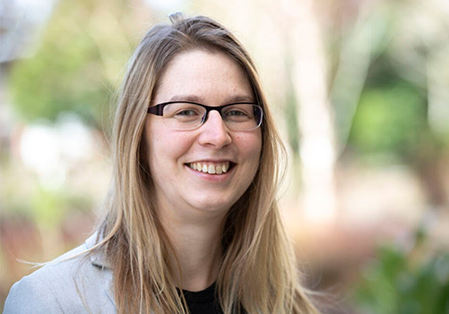
Stefanie Mueller leads the HCI Engineering Group at CSAIL. In her work, she develops novel hardware and software systems that advance personal fabrication technologies.
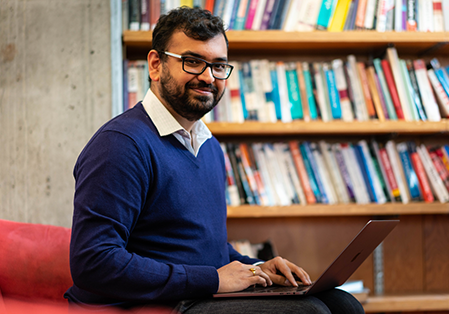
Arvind Satyanarayan, who leads the MIT Visualization Group, uses visualization to study intelligence augmentation, specifically how software systems can help amplify our cognition and creativity, while respecting our agency.
Given that our smartphones have largely become appendages over the last decade, it’s hard to imagine that ten years ago there was no Instagram, Uber, TikTok or Tinder. The ways we move, shop, eat and communicate continue to evolve thanks to the technologies we use. It can be easy to forget how quickly things have changed - so let’s turn back the clocks and reminisce about some of the computing breakthroughs that have transformed our lives in the ’10s.
In opening the AI and the Work of the Future Congress, MIT Professor Daniela Rus presented diverging views of how artificial intelligence will impact jobs worldwide.
By automating certain menial tasks, experts think AI is poised to improve human quality of life, boost profits, and create jobs, said Rus, director of the Computer Science and Artificial Intelligence Laboratory (CSAIL) and the Andrew and Erna Viterbi Professor of Electrical Engineering and Computer Science.
Continue the conversation of AI and the Future of Work
After the AI and the Future of Work Congress on Nov 21, keep the conversation going! Cap off your time on campus by participating in the AI & Work of the Future Unconference on Friday, November 22.
Join fellow participants and bring your biggest questions and most innovative ideas to this half-day event. No pre-determined topics, keynotes, or panels - we’ll amplify and facilitate the AI and future of work-driven conversations that matter most to you and your organization.
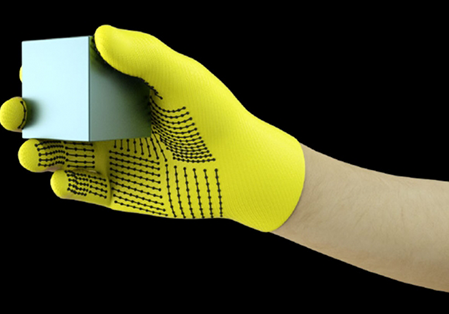
Wearing a sensor-packed glove while handling a variety of objects, MIT CSAIL researchers have compiled a massive dataset that enables an AI system to recognize objects through touch alone. The information could be leveraged to help robots identify and manipulate objects, and may aid in prosthetics design.
MIT and the US Air Force have signed an agreement to launch a new program designed to make fundamental advances in artificial intelligence that could improve Air Force operations while also addressing broader societal needs.