Cameras and computers together can conquer some seriously stunning feats. Giving computers vision has helped us fight wildfires in California, understand complex and treacherous roads — and even see around corners.
Computer vision models have learned to identify objects in photos so accurately that some can outperform humans on some datasets. But when those same object detectors are turned loose in the real world, their performance noticeably drops, creating reliability concerns for self-driving cars and other safety-critical systems that use machine vision.
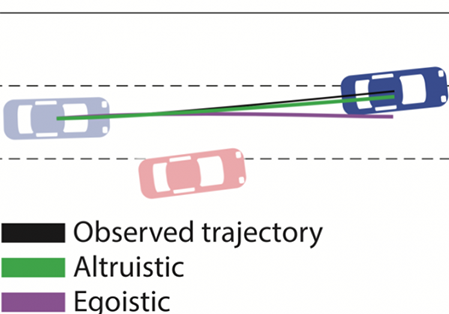
Recently a team led by researchers at MIT’s Computer Science and Artificial Intelligence Laboratory (CSAIL) has been exploring whether self-driving cars can be programmed to classify the social personalities of other drivers, so that they can better predict what different cars will do — and, therefore, be able to drive more safely among them.
A few years ago, the idea of tricking a computer vision system by subtly altering pixels in an image or hacking a street sign seemed like more of a hypothetical threat than anything to seriously worry about.
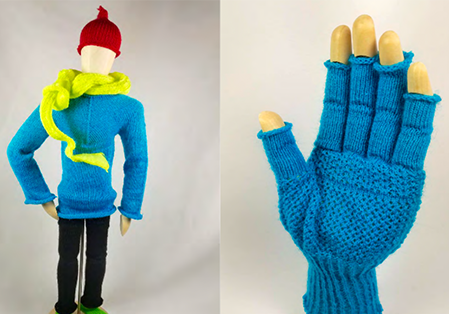
From 3-D printing to 3-D knitting, CSAIL researchers venture to streamline design technology through AI. The computer-aided design tool allows for customization of patterns based on user preferences with minimal programming knowledge needed.
Robots that have been programmed to see or feel can’t use these signals quite as interchangeably. To better bridge this sensory gap, researchers from MIT’s Computer Science and Artificial Intelligence Laboratory (CSAIL) have come up with a predictive artificial intelligence (AI) that can learn to see by touching, and learn to feel by seeing.
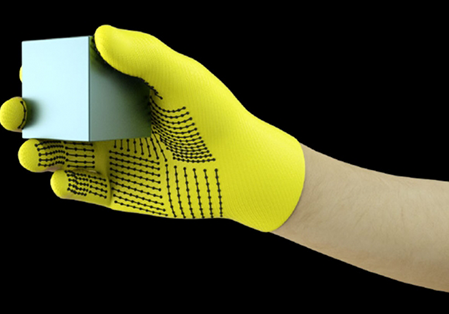
Wearing a sensor-packed glove while handling a variety of objects, MIT CSAIL researchers have compiled a massive dataset that enables an AI system to recognize objects through touch alone. The information could be leveraged to help robots identify and manipulate objects, and may aid in prosthetics design.