Given that our smartphones have largely become appendages over the last decade, it’s hard to imagine that ten years ago there was no Instagram, Uber, TikTok or Tinder. The ways we move, shop, eat and communicate continue to evolve thanks to the technologies we use. It can be easy to forget how quickly things have changed - so let’s turn back the clocks and reminisce about some of the computing breakthroughs that have transformed our lives in the ’10s.
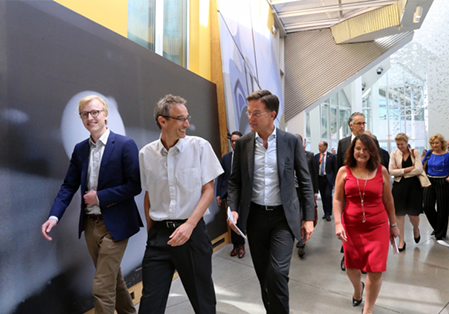
Josh Tenenbaum, a professor in MIT’s Department of Brain and Cognitive Sciences who studies human cognition, has been named a recipient of a 2019 MacArthur Fellowship.
Technology as a vector for positive change | Technology for a better world
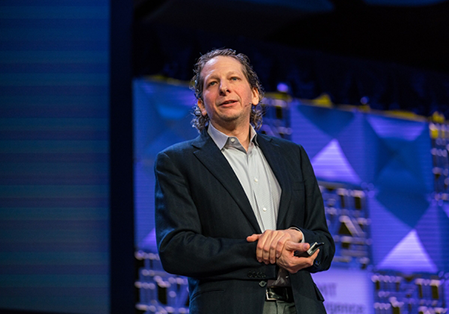
CSAIL recently established the TEDxMIT series. The TEDxMIT events will feature talks about important and impactful ideas by members of the broader MIT community.
This event is organized by Daniela Rus and John Werner, in collaboration with a team of undergraduate students led by Stephanie Fu and Rucha Keklar.
MIT CSAIL unsealed a special time capsule from 1999 after a self-taught programmer Belgium solved a puzzle devised by MIT professor and famed cryptographer Ron Rivest.
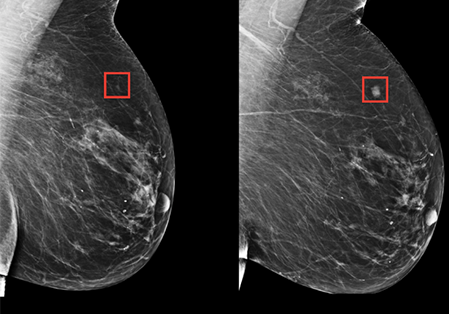
A team from MIT’s Computer Science and Artificial Intelligence Laboratory (CSAIL) and Massachusetts General Hospital (MGH) has created a new deep learning model that can predict from a mammogram if a patient is likely to develop breast cancer in the future. They trained their model on mammograms and known outcomes from over 60,000 patients treated at MGH, and their model learned the subtle patterns in breast tissue that are precursors to malignancy.
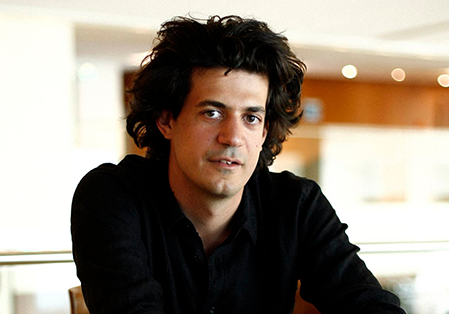
Constantinos (“Costis”) Daskalakis, an MIT professor and CSAIL principal investigator, has won the 2018 ACM Grace Murray Hopper Award. Daskalakis was honored for “proving that the computational complexity of finding Nash equilibria is the same as that of finding Brouwer fixed points, a proof since extended to several other equilibrium notions.”
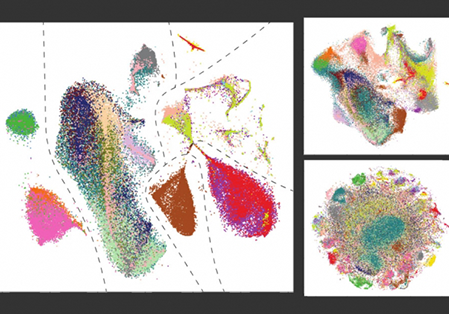
A new algorithm developed by MIT researchers takes cues from panoramic photography to merge massive, diverse cell datasets into a single source that can be used for medical and biological studies.