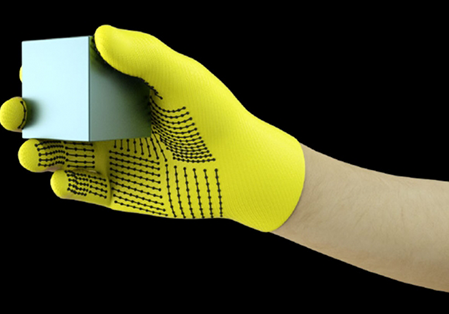
Wearing a sensor-packed glove while handling a variety of objects, MIT CSAIL researchers have compiled a massive dataset that enables an AI system to recognize objects through touch alone. The information could be leveraged to help robots identify and manipulate objects, and may aid in prosthetics design.
If you’ve ever wondered what a loaf of bread would look like as a cat, edges2cats is for you. The program that turns sketches into images of cats is one of many whimsical creations inspired by Phillip Isola’s image-to-image translation software released in the early days of generative adversarial networks, or GANs.
MIT and the US Air Force have signed an agreement to launch a new program designed to make fundamental advances in artificial intelligence that could improve Air Force operations while also addressing broader societal needs.
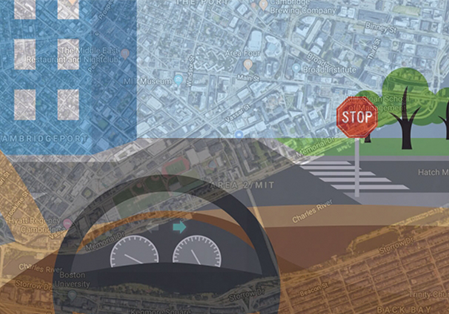
With aims of bringing more human-like reasoning to autonomous vehicles, a team led by researchers at MIT CSAIL have created a system that uses only simple maps and visual data to enable driverless cars to navigate routes in new, complex environments.
Technology as a vector for positive change | Technology for a better world
CSAIL recently established the TEDxMIT series. The TEDxMIT events will feature talks about important and impactful ideas by members of the broader MIT community.
This event is organized by Daniela Rus and John Werner, in collaboration with a team of undergraduate students led by Stephanie Fu and Rucha Keklar.
MIT researchers have devised a method for assessing how robust machine-learning models known as neural networks are for various tasks, by detecting when the models make mistakes they shouldn’t.
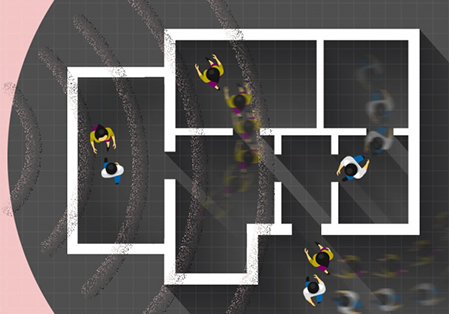
We live in a world of wireless signals flowing around us and bouncing off our bodies. MIT researchers are now leveraging those signal reflections to provide scientists and caregivers with valuable insights into people’s behavior and health.