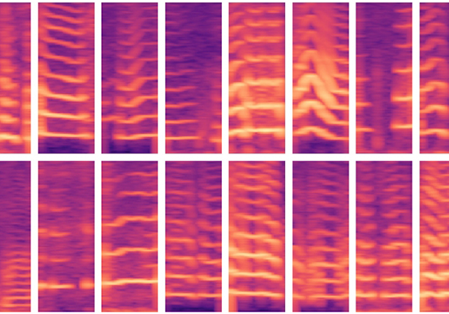
A new machine learning model allows for increased predictive analytics and a higher accuracy for diagnosing and treating patients with vocal cord disorders.
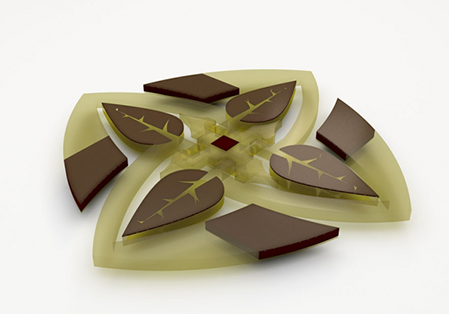
An automated system developed by MIT researchers designs and 3-D prints complex robotic parts called actuators that are optimized according to an enormous number of specifications. In short, the system does automatically what is virtually impossible for humans to do by hand.
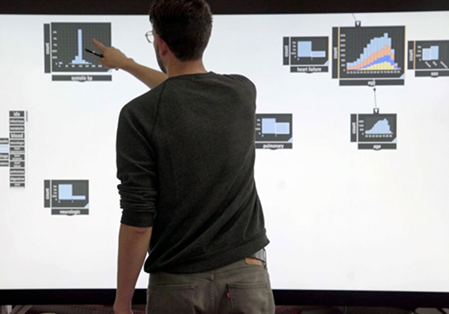
In the Iron Man movies, Tony Stark uses a holographic computer to project 3D data into thin air, manipulate them with his hands, and find fixes to his superhero troubles. In the same vein, researchers from MIT and Brown University have now developed a system for interactive data analytics that runs on touchscreens and lets everyone — not just billionaire tech geniuses — tackle real-world issues.
A team from MIT and IBM has now done exactly that with “GANpaint Studio,” a system that can automatically generate realistic photographic images and edit objects inside them. In addition to helping artists and designers make quick adjustments to visuals, the researchers say the work may help computer scientists identify “fake” images.
Dina Katabi,the Andrew and Erna Viterbi Professor of Electrical Engineering and Computer Science, has been named as aGreat Immigrantby the Carnegie Corporation of New York. Katabi, who was born in Syria, is among 38 naturalized citizens from 35 countries of origin who are being celebrated for their contributions to American society.
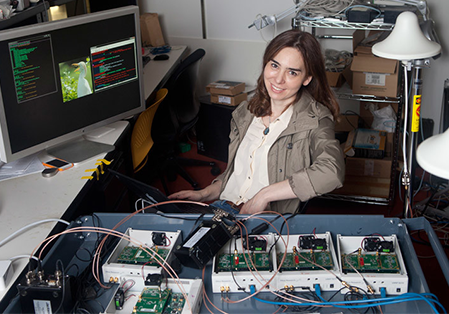
Over the past year MIT CSAIL has worked with Novartis to test a novel technology for passive, contactless monitoring of physiological signals that may be used to monitor clinical trial patients in their homes.
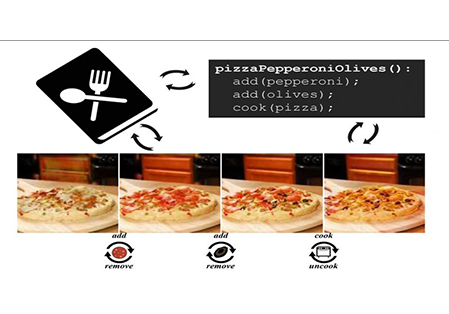
A team of researchers from MIT CSAIL and QCRI have developed a neural network that can look at an image of a pizza, determine the type and distribution of ingredients, and figure out the correct order to layer the pizza before cooking.
Robots that have been programmed to see or feel can’t use these signals quite as interchangeably. To better bridge this sensory gap, researchers from MIT’s Computer Science and Artificial Intelligence Laboratory (CSAIL) have come up with a predictive artificial intelligence (AI) that can learn to see by touching, and learn to feel by seeing.