Image
road tagger
MIT news article

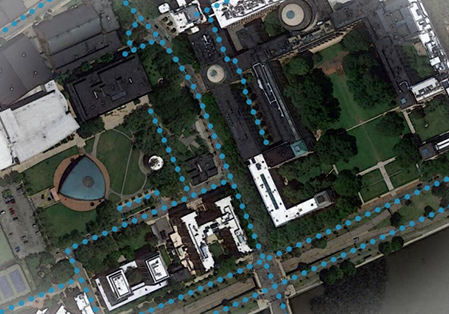
“Most updated digital maps are from places that big companies care the most about. If you’re in places they don’t care about much, you’re at a disadvantage with respect to the quality of map,” says co-author Sam Madden, a professor in the Department of Electrical Engineering and Computer Science (EECS) and a researcher in the Computer Science and Artificial Intelligence Laboratory (CSAIL). “Our goal is to automate the process of generating high-quality digital maps, so they can be available in any country.”

Reality Hack Hackathon
Join us in experiencing VR/AR/XR projects created during the MIT Reality Hack Hackathon 2020! Co-hosted with VR/AR@MIT.

2:00PM - 4:30PM EST

After an intense weekend of creating projects, teams at MIT Reality Hack will show off their hard work! Over 300 participants working as developers, designers, and specialists will participate in this year's Reality Hack. The Public Expo is your chance to check out the projects that participants produce.

Image
faster computer chips
CSAIL article

“Modern computer processors are opaque, horrendously complicated, and difficult to understand. It is also incredibly challenging to write computer code that executes as fast as possible for these processors,” says co-author Michael Carbin, an assistant professor in the Department of Electrical Engineering and Computer Science (EECS). “This tool is a big step forward toward fully modeling the performance of these chips for improved efficiency.”

Image
news choices
MIT news article

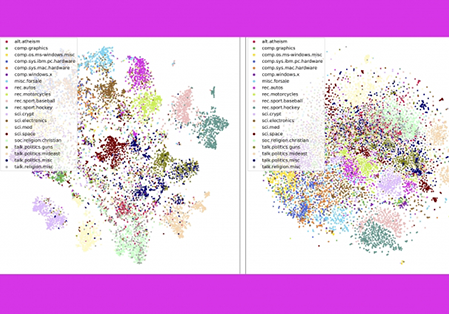
With billions of books, news stories, and documents online, there’s never been a better time to be reading — if you have time to sift through all the options. “There’s a ton of text on the internet,” says Justin Solomon, an assistant professor at MIT. “Anything to help cut through all that material is extremely useful.”

Image
biggest tech breakthroughs
CSAIL article

Given that our smartphones have largely become appendages over the last decade, it’s hard to imagine that ten years ago there was no Instagram, Uber, TikTok or Tinder. The ways we move, shop, eat and communicate continue to evolve thanks to the technologies we use. It can be easy to forget how quickly things have changed - so let’s turn back the clocks and reminisce about some of the computing breakthroughs that have transformed our lives in the ’10s.

Image
MIT Schwarzman College of Computing
MIT news article

Jointly part of the School of Engineering and Schwarzman College of Computing, EECS is now composed of three overlapping sub-units in electrical engineering (EE), computer science (CS), and artificial intelligence and decision-making (AI+D), which brings together computer science-heritage AI and machine learning with electrical engineering-heritage information and decision systems to exploit their significant synergies. The department will remain responsible for Course 6.

Image
Julie Shah
MIT news article

The road to commencement is a long one, especially for graduate students whose degree programs may take upwards of six years. There are many moments when focus may be lost and excitement may dwindle. Faculty mentors can play a key role in helping students persevere.