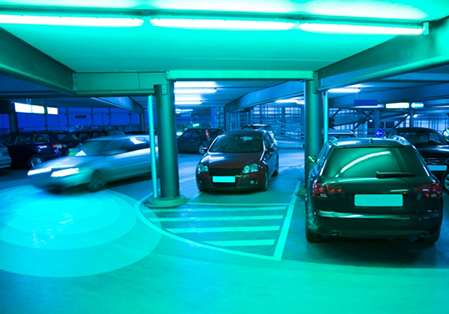
To improve the safety of autonomous systems, MIT CSAIL scientists have developed a system that can sense tiny changes in shadows on the ground to determine if there’s a moving object coming around the corner.
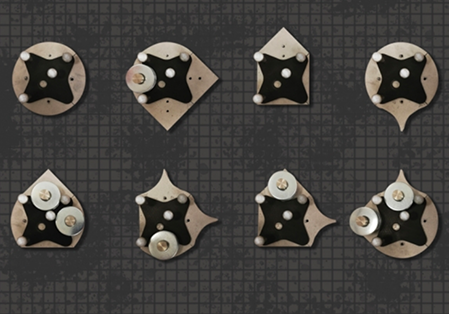
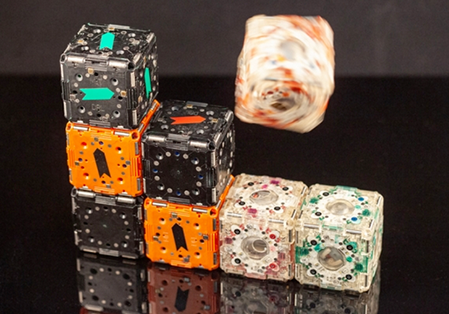
Swarms of simple, interacting robots have the potential to unlock stealthy abilities for accomplishing complex tasks. Getting these robots to achieve a true-hive like mind of coordination, though, has still proved to be a hurdle.
This talk covers work being done in the Retail and Consumer Products industries, where there is a need to track and trace live goods including plants and food. The technical aspects of how to implement this will be covered including where Internet of Things (IoT) sensors are leveraged to provide location, status, and state to know previous, current, and future provenance of products materials, and consumer goods. Blockchain, sensors, and analytics will be covered in specifically how they are used in various examples.
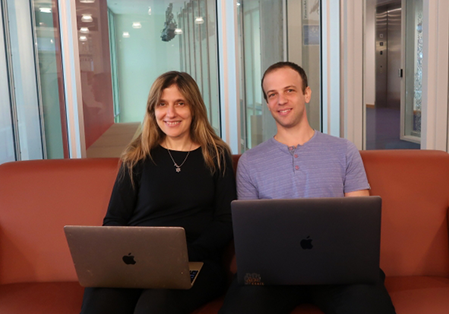
MIT researchers have developed a model that recovers valuable data lost from images and video that have been “collapsed” into lower dimensions.
The model could be used to recreate video from motion-blurred images, or from new types of cameras that capture a person’s movement around corners but only as vague one-dimensional lines. While more testing is needed, the researchers think this approach could someday could be used to convert 2D medical images into more informative — but more expensive — 3D body scans, which could benefit medical imaging in poorer nations.
“There’s a growing concern about machine-generated fake text, and for a good reason,” says CSAIL PhD student Tal Schuster, lead author on a new paper on their findings. “I had an inkling that something was lacking in the current approaches to identifying fake information by detecting auto-generated text — is auto-generated text always fake? Is human-generated text always real?”
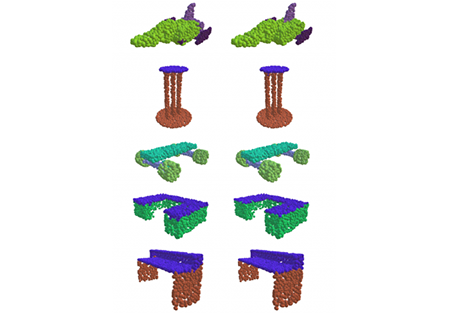
If you’ve ever seen a self-driving car in the wild, you might wonder about that spinning cylinder on top of it.
It’s a “lidar sensor,” and it’s what allows the car to navigate the world. By sending out pulses of infrared light and measuring the time it takes for them to bounce off objects, the sensor creates a “point cloud” that builds a 3D snapshot of the car’s surroundings.
Existing efforts to detect IP hijacks tend to look at specific cases when they’re already in process. But what if we could predict these incidents in advance by tracing things back to the hijackers themselves?
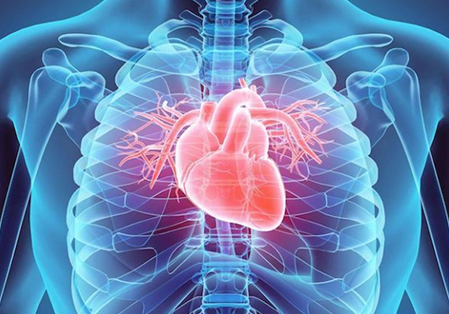
A team from MIT’s Computer Science and Artificial Intelligence Laboratory (CSAIL) came up with a new system for better predicting health outcomes: a machine learning model that can estimate, from the electrical activity of their heart, a patient’s risk of cardiovascular death.
Josh Tenenbaum, a professor in MIT’s Department of Brain and Cognitive Sciences who studies human cognition, has been named a recipient of a 2019 MacArthur Fellowship.