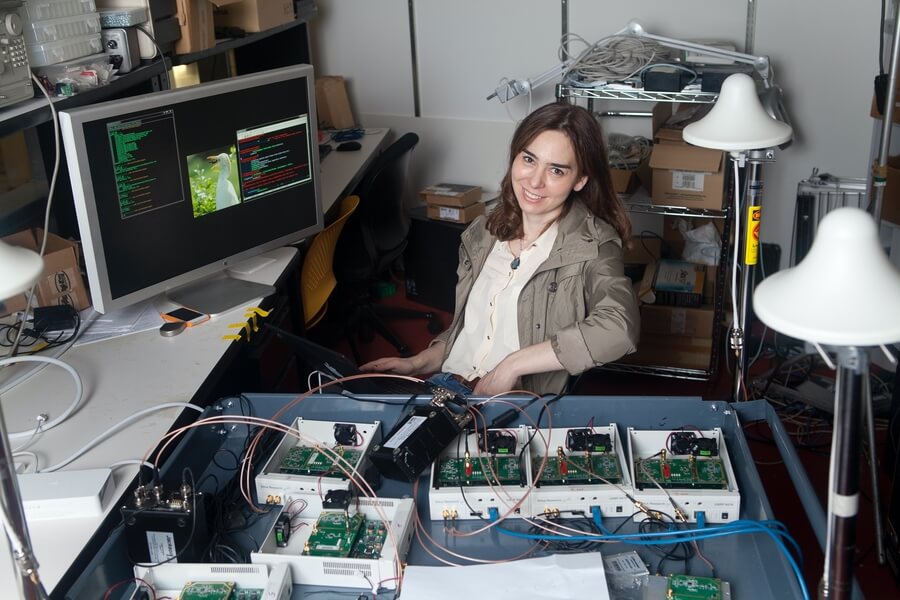
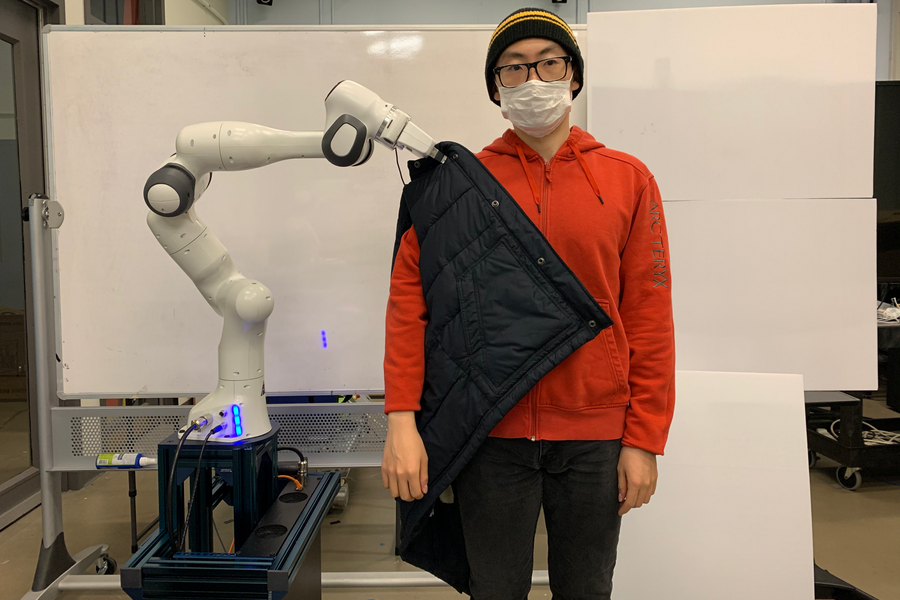
By measuring a person’s movements and poses, smart clothes developed at MIT CSAIL could be used for athletic training, rehabilitation, or health-monitoring for elder-care facilities.
Improper adherence to doctors’ orders is commonplace, accounting for thousands of deaths and billions of dollars in medical costs annually. MIT researchers have developed a system to reduce those numbers for some types of medications.
An international team of scholars has read an unopened letter from early modern Europe — without breaking its seal or damaging it in any way — using an automated computational flattening algorithm.
Leveraging research done on campus, student-run MIT Driverless partners with industry collaborators to develop and test autonomous technologies in real-world racing scenarios.
A team of scientists from MIT’s Computer Science and Artificial Intelligence Laboratory (CSAIL) and Jameel Clinic (J-Clinic) demonstrated a deep learning system to predict cancer risk using just a patient’s mammogram. The model showed significant promise and even improved inclusivity: It was equally accurate for both white and Black women, which is especially important given that Black women are 43 percent more likely to die from breast cancer.
MIT researchers have developed a type of neural network that learns on the job, not just during its training phase. These flexible algorithms, dubbed “liquid” networks, change their underlying equations to continuously adapt to new data inputs. The advance could aid decision making based on data streams that change over time, including those involved in medical diagnosis and autonomous driving.