Today’s data centers eat up and waste a good amount of energy responding to user requests as fast as possible, with only a few microseconds delay. A new system by MIT researchers improves the efficiency of high-speed operations by better assigning time-sensitive data processing across central processing unit (CPU) cores and ensuring hardware runs productively.
Undergraduate research projects show how students are advancing research in human and artificial intelligence, and applying intelligence tools to other disciplines.
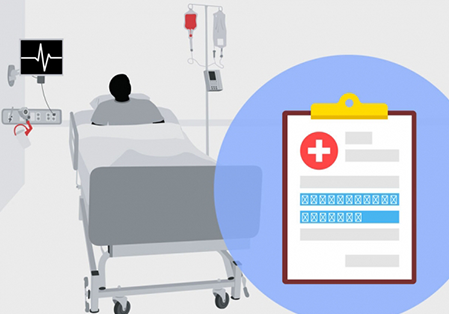
Neural network assimilates multiple types of health data to help doctors make decisions with incomplete information.
MIT researchers have developed a model that can assimilate multiple types of a patient’s health data to help doctors make decisions with incomplete information.
Researchers from MIT’s Computer Science and Artificial Intelligence Laboratory (CSAIL) have come up with a way to get a better handle on this understanding of complex motion.
The new system uses an algorithm that can take 2-D videos and turn them into 3-D-printed “motion sculptures” that show how a human body moves through space.
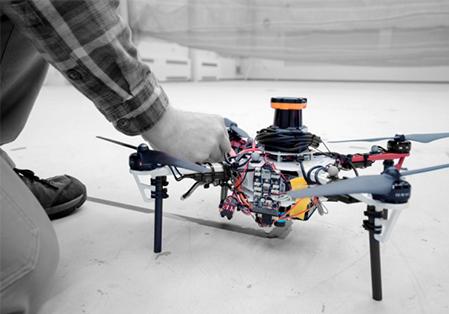
MIT researchers describe an autonomous system for a fleet of drones to collaboratively search under dense forest canopies. The drones use only onboard computation and wireless communication — no GPS required.