New technique significantly reduces training and inference time on extensive datasets to keep pace with fast-moving data in finance, social networks, and fraud detection in cryptocurrency.
An experimental platform that puts moderation in the hands of its users shows that people do evaluate posts effectively and share their assessments with others.
MIT CSAIL researchers solve a differential equation behind the interaction of two neurons through synapses to unlock a new type of speedy and efficient AI algorithm.
Researchers make headway in solving a longstanding problem of balancing curious “exploration” versus “exploitation” of known pathways in reinforcement learning.
Models trained on synthetic data can be more accurate than other models in some cases, which could eliminate some privacy, copyright, and ethical concerns from using real data.
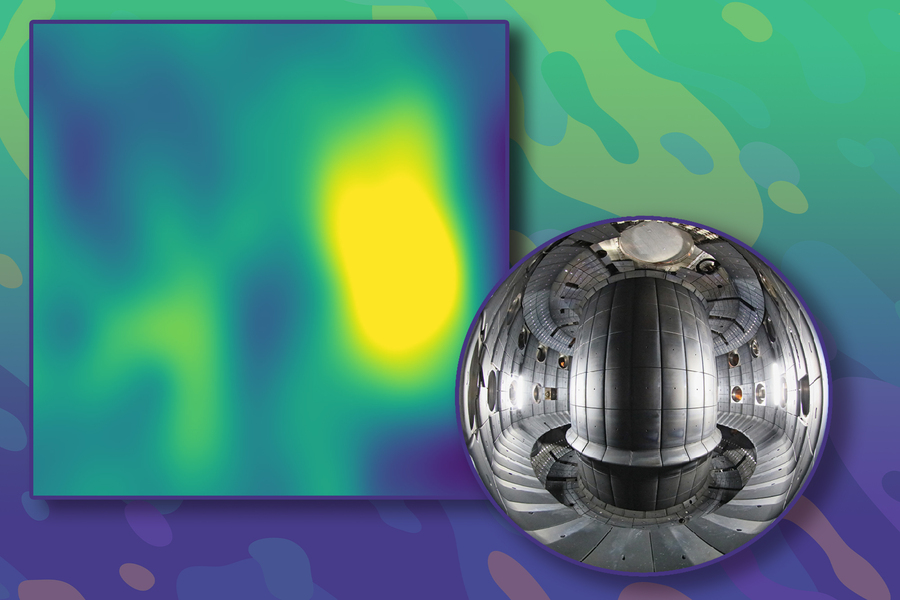
A new approach sheds light on the behavior of turbulent structures that can affect the energy generated during fusion reactions, with implications for reactor design.
MIT researchers have developed a machine-learning technique that accurately captures and models the underlying acoustics of a scene from only a limited number of sound recordings. In this image, a sound emitter is marked by a red dot. The colors show the sound volume if a listener were to stand at different locations — yellow is louder and blue is quieter.