Every year, global health experts are faced with a high-stakes decision: which flu strains should go into the next seasonal vaccine? The choice must be made months in advance, long before flu season even begins, and it can often feel like a race against the clock. If the selected strains match those that circulate, the vaccine will likely be highly effective. But if the prediction is off, protection can drop significantly, leading to (potentially preventable) illness and strain on healthcare systems.
When the IEEE International Conference on Robotics and Automation (ICRA) first convened 40 years ago, the robotics community shared a clear vision: robots would one day combine elegant mathematical models with advanced computation to handle complex tasks. Four decades later, the community is divided over how to reach that goal. That divide was on full display this May in Atlanta, where ICRA marked its anniversary with a unique closing keynote: a live Oxford-style debate on whether “data will solve robotics and automation.”
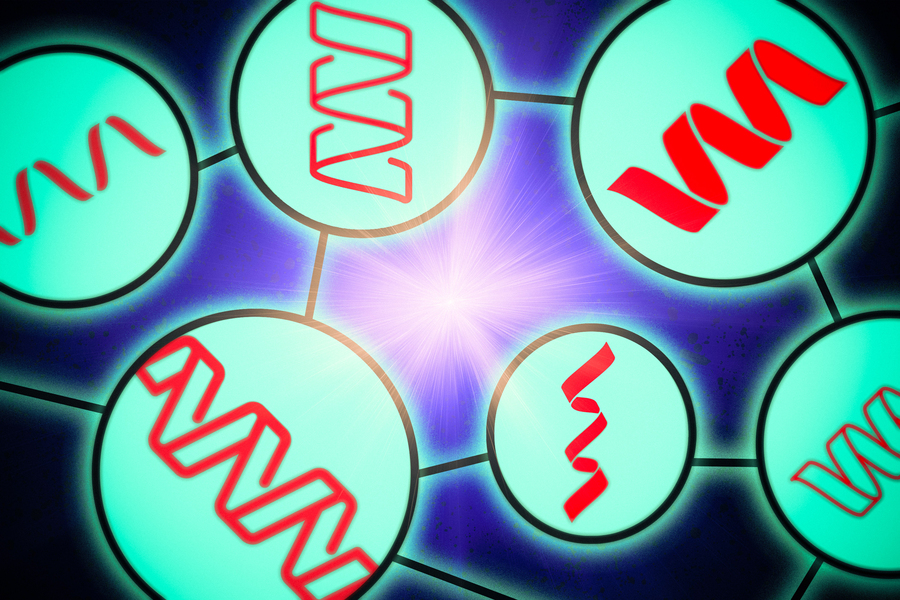
Within the past few years, models that can predict the structure or function of proteins have been widely used for a variety of biological applications, such as identifying drug targets and designing new therapeutic antibodies.
MIT researchers have developed a reconfigurable antenna that dynamically adjusts its frequency range by changing its physical shape, making it more versatile for communications and sensing than static antennas.
M.C. Escher’s artwork is a gateway into a world of depth-defying optical illusions, featuring “impossible objects” that break the laws of physics with convoluted geometries. What you perceive his illustrations to be depends on your point of view — for example, a person seemingly walking upstairs may be heading down the steps if you tilt your head sideways.
If you rotate an image of a molecular structure, a human can tell the rotated image is still the same molecule, but a machine-learning model might think it is a new data point. In computer science parlance, the molecule is “symmetric,” meaning the fundamental structure of that molecule remains the same if it undergoes certain transformations, like rotation.
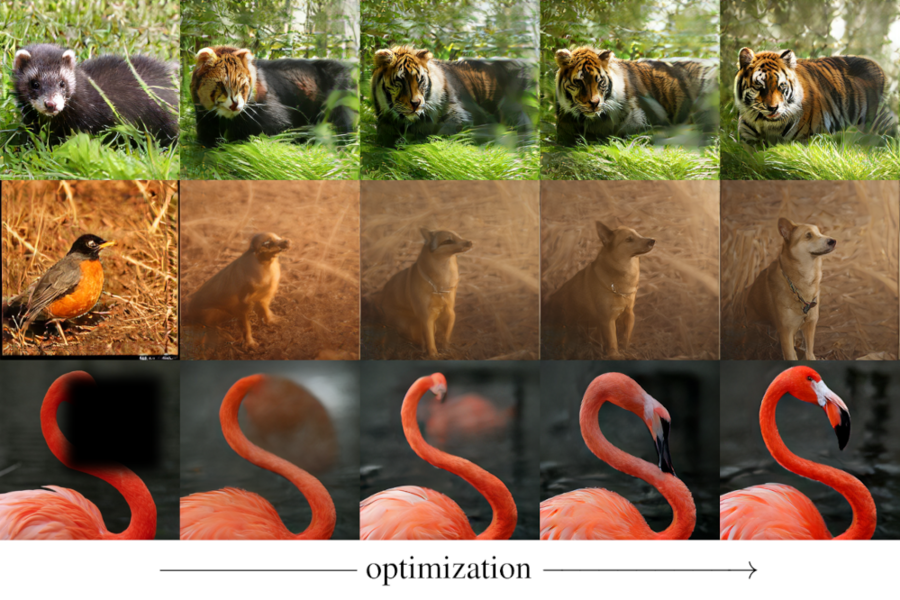
AI image generation — which relies on neural networks to create new images from a variety of inputs, including text prompts — is projected to become a billion-dollar industry by the end of this decade. Even with today’s technology, if you wanted to make a fanciful picture of, say, a friend planting a flag on Mars or heedlessly flying into a black hole, it could take less than a second. However, before they can perform tasks like that, image generators are commonly trained on massive datasets containing millions of images that are often paired with associated text. Training these generative models can be an arduous chore that takes weeks or months, consuming vast computational resources in the process.
Let’s say you’re reading a story, or playing a game of chess. You may not have noticed, but each step of the way, your mind kept track of how the situation (or “state of the world”) was changing. You can imagine this as a sort of sequence of events list, which we use to update our prediction of what will happen next.
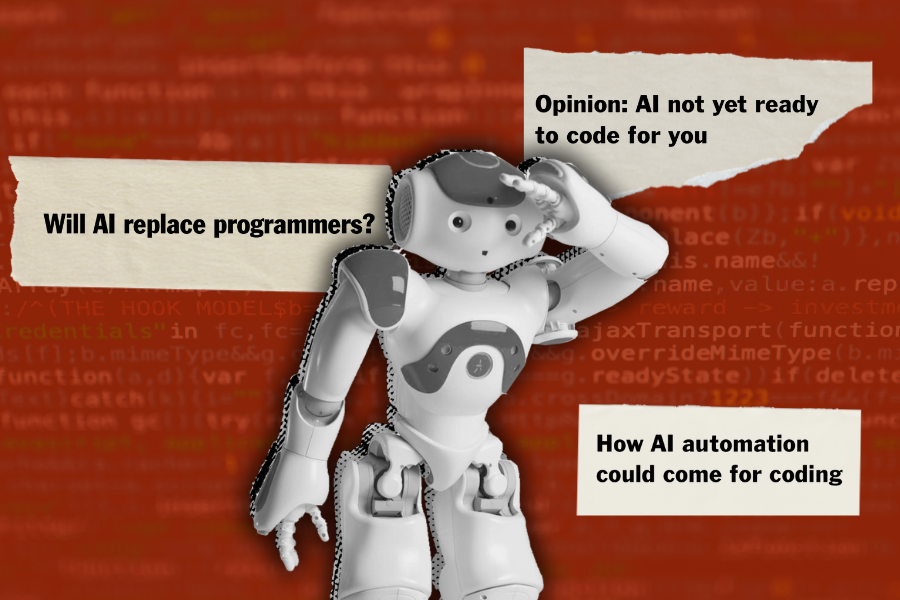
Imagine a future where artificial intelligence quietly shoulders the drudgery of software development: refactoring tangled code, migrating legacy systems, and hunting down race conditions, so that human engineers can devote themselves to architecture, design, and the genuinely novel problems still beyond a machine’s reach. Recent advances appear to have nudged that future tantalizingly close, but a new paper by researchers at MIT’s Computer Science and Artificial Intelligence Laboratory (CSAIL) and several collaborating institutions argues that this potential future reality demands a hard look at present-day challenges.
When ChatGPT or Gemini gives what seems to be an expert response to your burning questions, you may not realize how much information it relies on to give that reply. Like other popular artificial intelligence (AI) models, these chatbots rely on backbone systems called foundation models that train on billions or even trillions of data points.