When a natural disaster occurs, on-the-ground emergency response teams act quickly to make life-saving decisions. Reducing the response time in such situations is critical to reduce damage impact and save lives. Helpful efforts are being taken to reduce the burden, such as a damage assessment tool by UNDP, though few automated methods exist. In recent work, MIT is creating tools that can automatically analyze images.
MIT CSAIL and STEMM Global Scientific Community announced that they will gather thought leaders from all over the world at a virtual summit dedicated to AI in Healthcare on October 1-2, 2020. The aim of the summit is to boost effective collaboration among leading AI academics, healthcare experts and business leaders to support innovation in healthcare.
CSAIL will be launching a new initiative focused on machine learning applications. MachineLearningApplications@CSAIL, or “MLA@CSAIL”, will focus on current challenges in machine learning to prepare industry members for digital transformation in their workplaces.
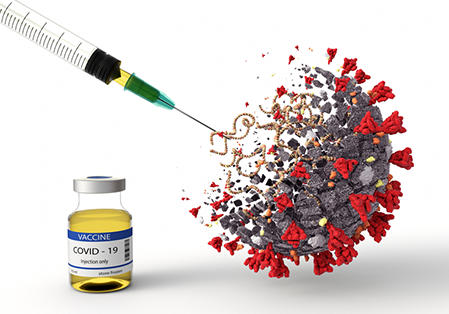
Recently, a team of researchers from MIT’s Computer Science and Artificial Intelligence Laboratory (CSAIL) took a new approach to getting us closer to a solution: a combinatorial machine learning system that selects peptides (short strings of amino acids) that are predicted to provide high population coverage for a vaccine.
When schools around the world closed their doors due to the coronavirus pandemic, the team behind MIT App Inventor — a web-based, visual-programming environment that allows children to develop applications for smartphones and tablets — began thinking about how they could not only help keep children engaged and learning, but also empower them to create new tools to address the pandemic.
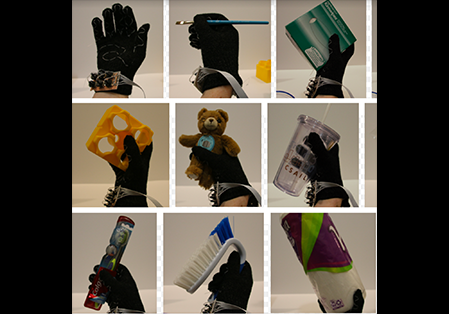
Augmented reality (AR) and virtual reality (VR) companies have been working for years on developing systems that can incorporate real-life objects into their digitized worlds. With that in mind, a team from CSAIL has developed a smart glove that can detect your hand pose, as well as distinguish between more than 30 different household objects.
MIT and University of Michigan researchers released a report on the security of OmniBallot, an Internet voting and ballot delivery system produced by Democracy Live. This system has been deployed in Delaware, West Virginia, and other jurisdictions.
In this episode of Radio Corona, we discuss digital contact tracing initiatives throughout the world with Danny Weitzner of MIT’s CSAIL, and Bobbie Johnson, a senior editor at MIT Technology Review.
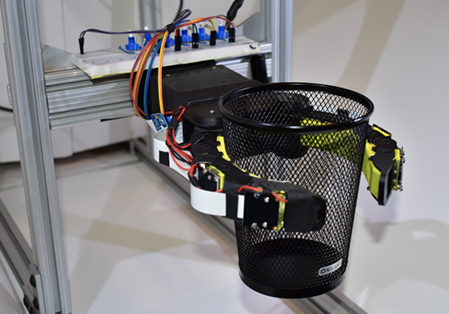
One of the hottest topics in robotics is the field of soft robots, which utilizes squishy and flexible materials rather than traditional rigid materials. But soft robots have been limited due to their lack of good sensing. A good robotic gripper needs to feel what it is touching (tactile sensing), and it needs to sense the positions of its fingers (proprioception). Such sensing has been missing from most soft robots.