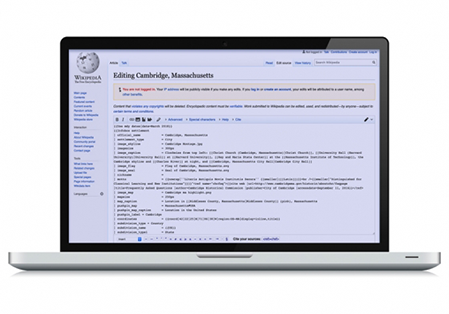
A system created by MIT researchers could be used to automatically update factual inconsistencies in Wikipedia articles, reducing time and effort spent by human editors who now do the task manually.
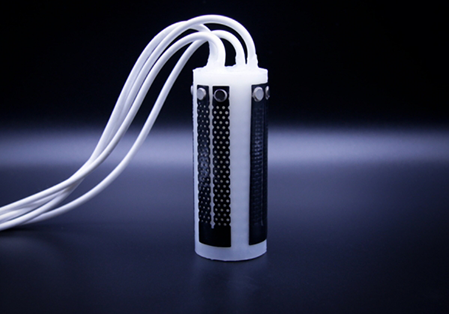
For the first time, MIT researchers have enabled a soft robotic arm to understand its configuration in 3D space, by leveraging only motion and position data from its own “sensorized” skin.
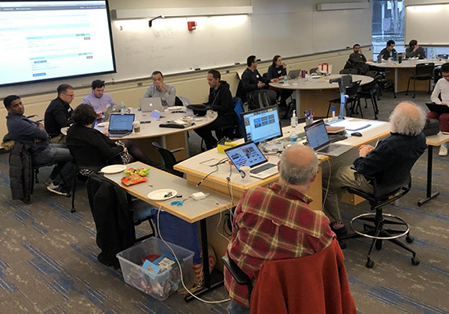
“I never thought about the kilowatt-hours I was using. But this hackathon gave me a chance to look at my carbon footprint and find ways to trade a small amount of model accuracy for big energy savings,” says Mohammad Haft-Javaherian.
A team from MIT’s Computer Science and Artificial Intelligence Laboratory (CSAIL) tested the boundaries of text. They came up with “TextFooler,” a general framework that can successfully attack natural language processing (NLP) systems — the types of systems that let us interact with our Siri and Alexa voice assistants — and “fool” them into making the wrong predictions.