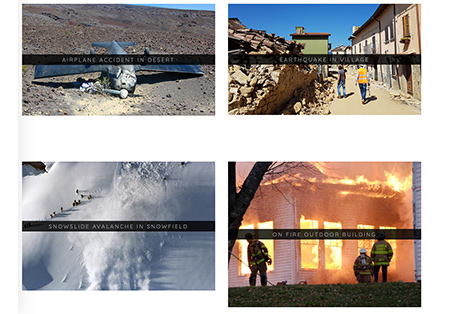
When a natural disaster occurs, on-the-ground emergency response teams act quickly to make life-saving decisions. Reducing the response time in such situations is critical to reduce damage impact and save lives. Helpful efforts are being taken to reduce the burden, such as a damage assessment tool by UNDP, though few automated methods exist. In recent work, MIT is creating tools that can automatically analyze images.
Launched in May, Covid Controls was developed by a team who met while working at the Singapore-MIT Alliance for Research & Technology (SMART), a research center created in 2007 by the Massachusetts Institute of Technology in partnership with the National Research Foundation of Singapore.
CSAIL will be launching a new initiative focused on machine learning applications. MachineLearningApplications@CSAIL, or “MLA@CSAIL”, will focus on current challenges in machine learning to prepare industry members for digital transformation in their workplaces.
MIT CSAIL and STEMM Global Scientific Community announced that they will gather thought leaders from all over the world at a virtual summit dedicated to AI in Healthcare on October 1-2, 2020. The aim of the summit is to boost effective collaboration among leading AI academics, healthcare experts and business leaders to support innovation in healthcare.