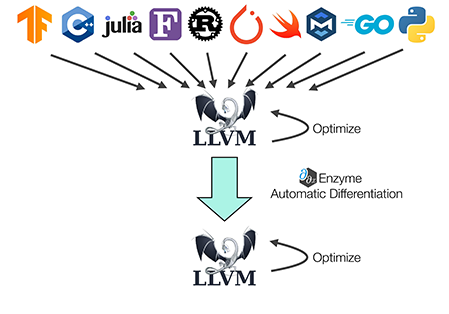
Suppose you're a machine-learning researcher trying to build a model that could help plan for the COVID-19 pandemic. You want to incorporate a disease simulator into the model, but it's written in the C++ programming language, rather than an existing machine-learning workflow like PyTorch or TensorFlow. A team from MIT CSAIL recently developed a clever work-around.
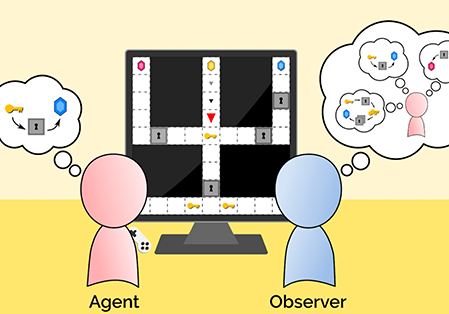
In the quest to capture social intelligence in machines, researchers from MIT’s Computer Science and Artificial Intelligence Laboratory (CSAIL) and the Department of Brain and Cognitive Sciences created an algorithm capable of inferring goals and plans, even when those plans might fail.
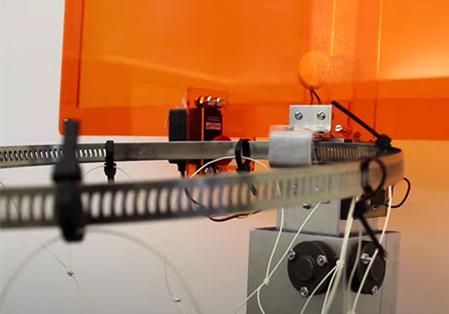
New system enables realistic variations in glossiness across a 3D-printed surface. The advance could aid fine art reproduction and the design of prosthetics.