null
Sam Madden
Professor, MIT EECS

Can your phone make you a safer driver? Or is it part of the problem? 📱🚗


MIT CSAIL Professor Sam Madden shares the origin story of Cambridge Mobile Telematics, a CSAIL spinout using smartphones and AI to prevent car crashes and save lives. In this episode, Professor Madden joins host Kara Miller to explore how accelerometers, algorithms, and well-timed incentives are transforming how we understand and improve driver behavior.

null
Andrew McAfee
Principal Research Scientist, MIT Sloan School of Management, Co-Director of the IDE, MIT

Economist, NYT bestselling author, and MIT Principal Research Scientist Andrew McAfee unpacks how AI is transforming corporate strategy across fields and industries. He shares what execs are getting right (and wrong), why “The Geek Way” is winning, and what AI means for the future of work, education, and innovation. McAfee says AI is “doing for cognitive work what the Industrial Revolution did for manual labor."

null
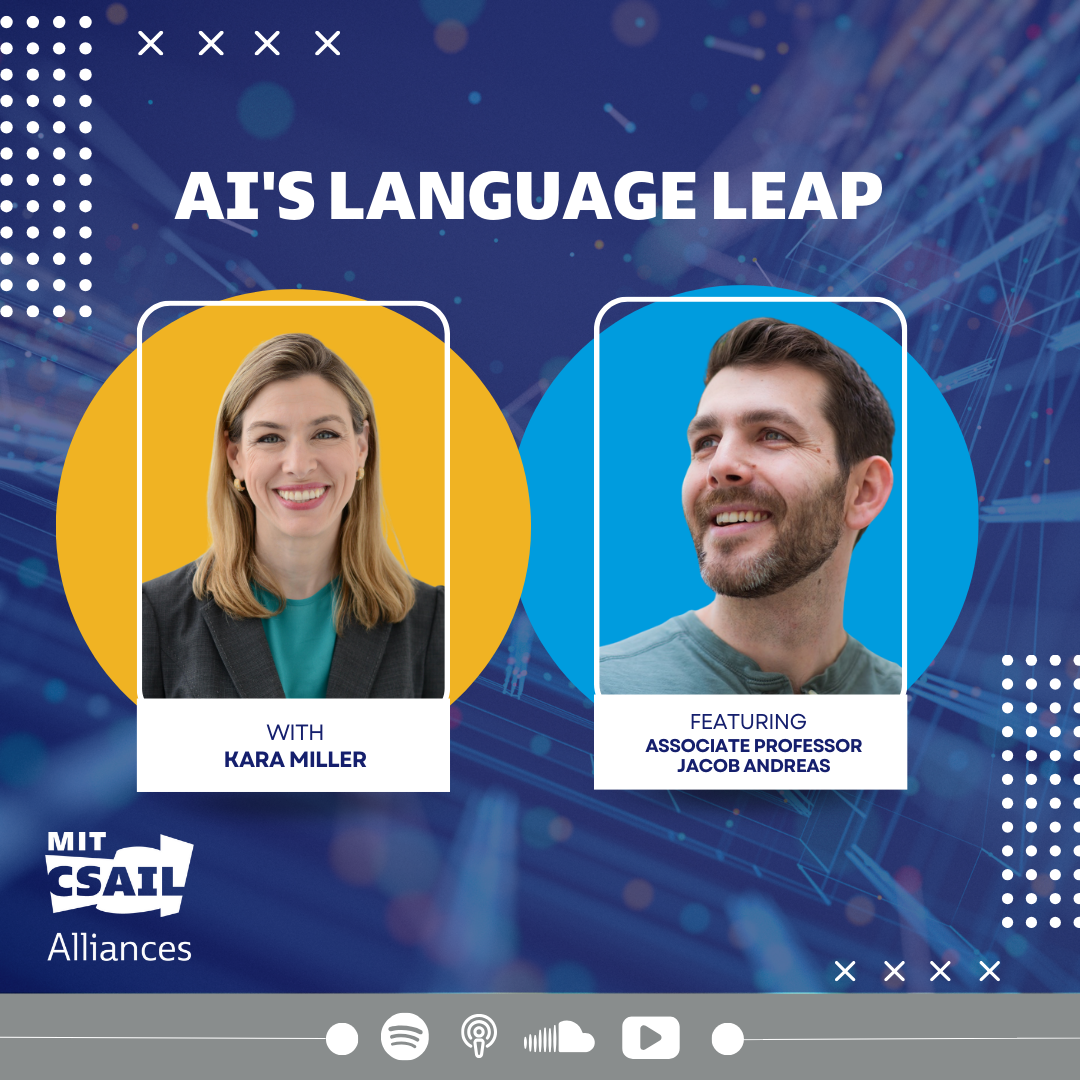
Jacob Andreas
Associate Professor, MIT EECS

MIT CSAIL Associate Professor Jacob Andreas walks listeners through how LLMs like ChatGPT evolved from academic curiosities to industry-disrupting technologies. 


Reflecting on the transformations he has observed in AI research, Professor Andreas discusses how some ideas—like linking NLP research to cognitive science—have taken a backseat, while others—like the importance of large-scale training data—remain central.

robot figure in front of a screen with equations lit up
David Autor
Professor of Economics, MIT
Sharut Gupta
PhD Student, MIT CSAIL

MIT Economics Professor David Autor says that AI is “not like a calculator where you just punch in the numbers and get the right answer. It's much harder to figure out how to be effective with it.” Offering unique insights into the future of work in an AI-powered world, Professor Autor explains his biggest worries, the greatest upside scenarios, and how he believes we should be approaching AI as a tool.