Image
MIT liquid networks
MIT news article

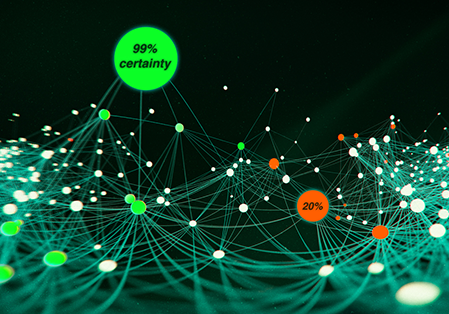
MIT researchers have developed a type of neural network that learns on the job, not just during its training phase. These flexible algorithms, dubbed “liquid” networks, change their underlying equations to continuously adapt to new data inputs. The advance could aid decision making based on data streams that change over time, including those involved in medical diagnosis and autonomous driving.

building digital health

Discover, engage, and build at Building for Digital Health 2021 from February 1st-7th. The free, virtual event features a series of 90-min tech talks and a 3-day hackathon. Learn from Google Cloud engineers and discover the capabilities of open source frameworks and Cloud infrastructure that enable advancements in medicine. Organized by MIT Hacking Medicine in partnership with Google Cloud and supported by Apple Health.

Ray and Maria Stata Center
MIT Future of Data, Trust, and Privacy co-faculty directors Daniel Weitzner and Srini Devadas will share an update on privacy preserving machine learning and how law, technology, and policy impact data governance.
Image
neutral networks mindstate
CSAIL article

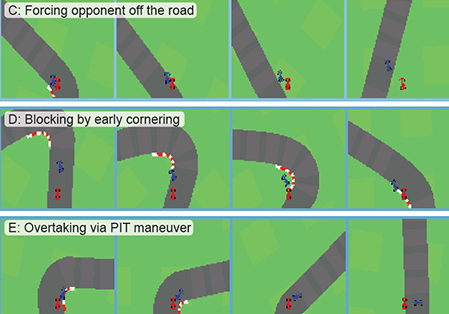
In a new paper, a team led by MIT computer scientists trained a neural network to learn NASCAR-style driving maneuvers purely from looking at a sequence of images taken from a two-person racing game. The network begins without knowing anything about cars, roads, or driving - and yet ultimately becomes able to do complex moves like overtaking an opponent on a turn and even forcing other cars off the road. 

work of the future
Work of the Future Event of the Year
The 4th annual Congress was a virtual event that featured the final report from the MIT Task Force on the Work of the Future. Hosted by MIT's Task Force on Work of the Future, CSAIL, and Initiative on the Digital Economy, this year's Congress highlighted research findings from the MIT Task Force on Work of the Future's final report released in November 2020. Given the rapidly changing environment brought on by Covid-19, this topic is more important and relevant than ever.