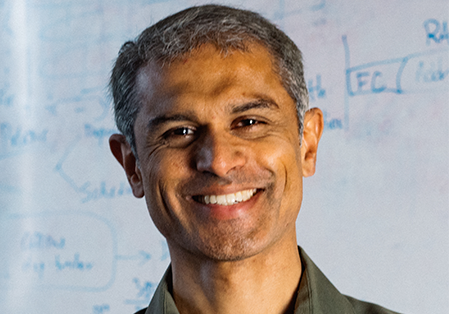
The Institute of Electrical and Electronics Engineers (IEEE) has named MIT professor Hari Balakrishnan an elected fellow for his contributions to “the design and application of mobile sensing systems.”
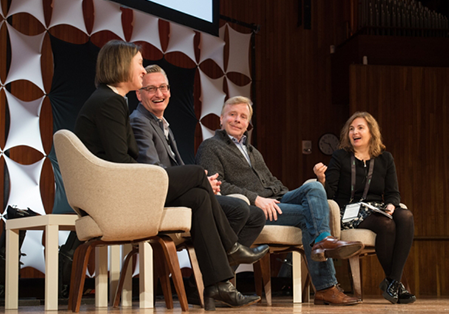
In opening the AI and the Work of the Future Congress, MIT Professor Daniela Rus presented diverging views of how artificial intelligence will impact jobs worldwide.
By automating certain menial tasks, experts think AI is poised to improve human quality of life, boost profits, and create jobs, said Rus, director of the Computer Science and Artificial Intelligence Laboratory (CSAIL) and the Andrew and Erna Viterbi Professor of Electrical Engineering and Computer Science.
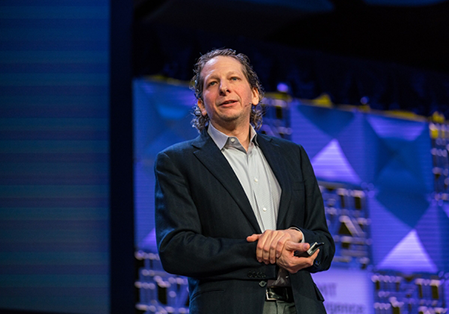
Josh Tenenbaum, a professor in MIT’s Department of Brain and Cognitive Sciences who studies human cognition, has been named a recipient of a 2019 MacArthur Fellowship.
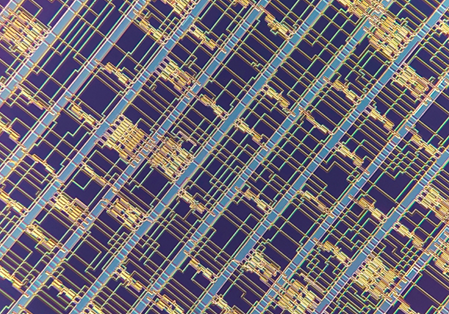
After years of tackling numerous design and manufacturing challenges, MIT researchers have built a modern microprocessor from carbon nanotube transistors, which are widely seen as a faster, greener alternative to their traditional silicon counterparts.
Stock market investors often rely on financial risk theories that help them maximize returns while minimizing financial loss due to market fluctuations. These theories help investors maintain a balanced portfolioto ensure they’ll never lose more money than they’re willing to part with at any given time.
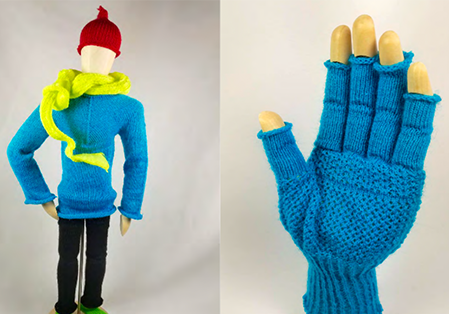
From 3-D printing to 3-D knitting, CSAIL researchers venture to streamline design technology through AI. The computer-aided design tool allows for customization of patterns based on user preferences with minimal programming knowledge needed.
Researchers from MIT’s Computer Science and Artificial Intelligence Laboratory (CSAIL) are working on the problem, and have developed a new system called “Minerva” that allows multiple people to stream video over a single network with minimal buffering and pixelation.
A team from MIT and IBM has now done exactly that with “GANpaint Studio,” a system that can automatically generate realistic photographic images and edit objects inside them. In addition to helping artists and designers make quick adjustments to visuals, the researchers say the work may help computer scientists identify “fake” images.