Getting robots to do things isn’t easy: Usually, scientists have to either explicitly program them or get them to understand how humans communicate via language.
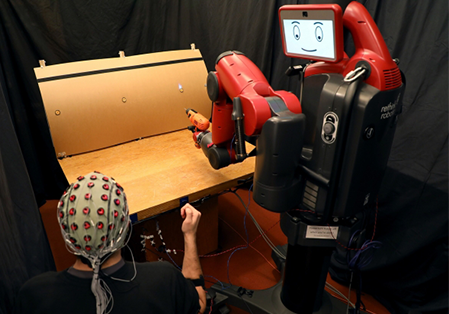
But what if we could control robots more intuitively, using just hand gestures and brainwaves?
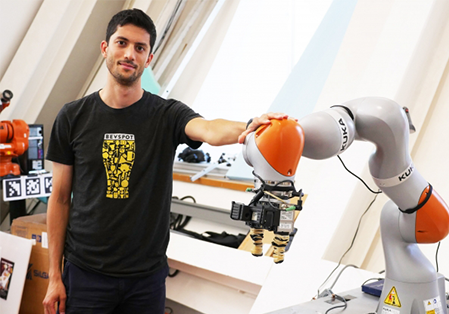
We present Dense Object Nets, which build on recent developments in self-supervised dense descriptor learning, as a consistent object representation for visual understanding and manipulation.
We demonstrate how a sequence model and a sampling-based planner can influence each other to produce efficient plans and how such a model can automatically learn to take advantage of observations of the environment.
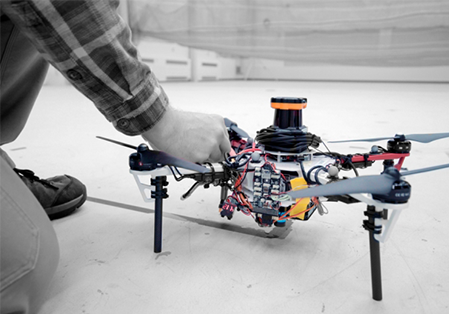
MIT researchers describe an autonomous system for a fleet of drones to collaboratively search under dense forest canopies. The drones use only onboard computation and wireless communication — no GPS required.
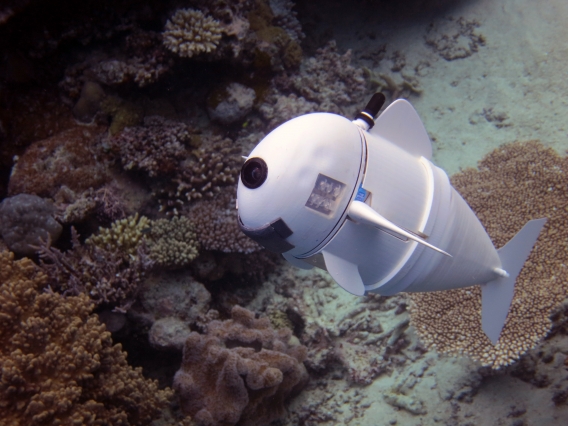
This work presents the design, fabrication, control, and oceanic testing of a soft robotic fish that can swim in three dimensions to continuously record the aquatic life it is following or engaging.