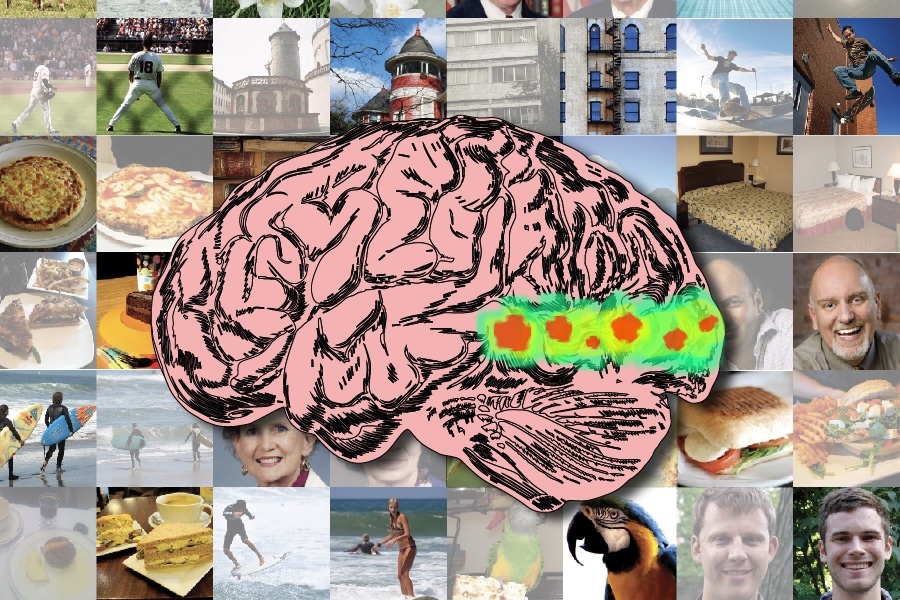
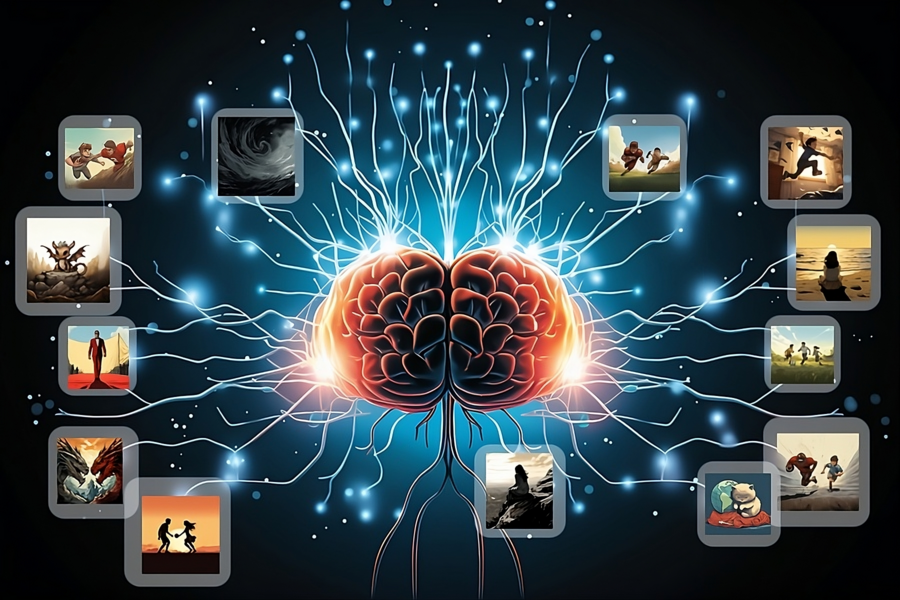
For nearly a decade, a team of MIT Computer Science and Artificial Intelligence Laboratory (CSAIL) researchers have been seeking to uncover why certain images persist in a people's minds, while many others fade. To do this, they set out to map the spatio-temporal brain dynamics involved in recognizing a visual image. And now for the first time, scientists harnessed the combined strengths of magnetoencephalography (MEG), which captures the timing of brain activity, and functional magnetic resonance imaging (fMRI), which identifies active brain regions, to precisely determine when and where the brain processes a memorable image.
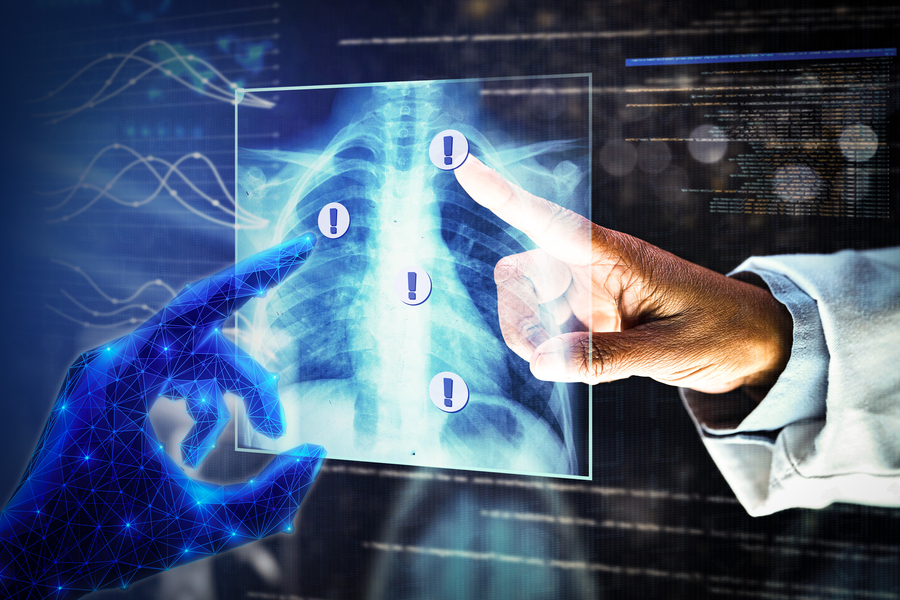
In biomedicine, segmentation involves annotating pixels from an important structure in a medical image, like an organ or cell. Artificial intelligence models can help clinicians by highlighting pixels that may show signs of a certain disease or anomaly.
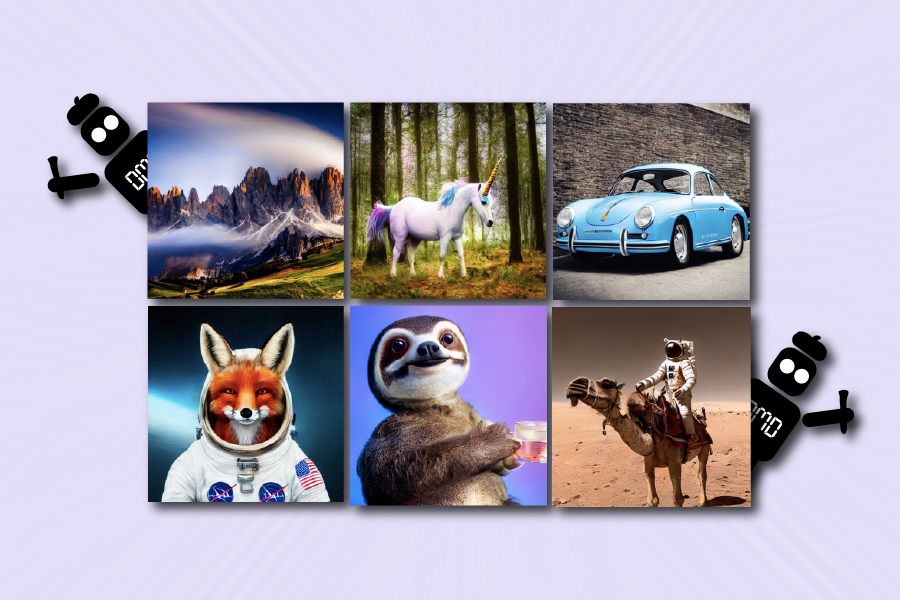
In our current age of artificial intelligence, computers can generate their own “art” by way of diffusion models, iteratively adding structure to a noisy initial state until a clear image or video emerges. Diffusion models have suddenly grabbed a seat at everyone’s table: Enter a few words and experience instantaneous, dopamine-spiking dreamscapes at the intersection of reality and fantasy. Behind the scenes, it involves a complex, time-intensive process requiring numerous iterations for the algorithm to perfect the image.
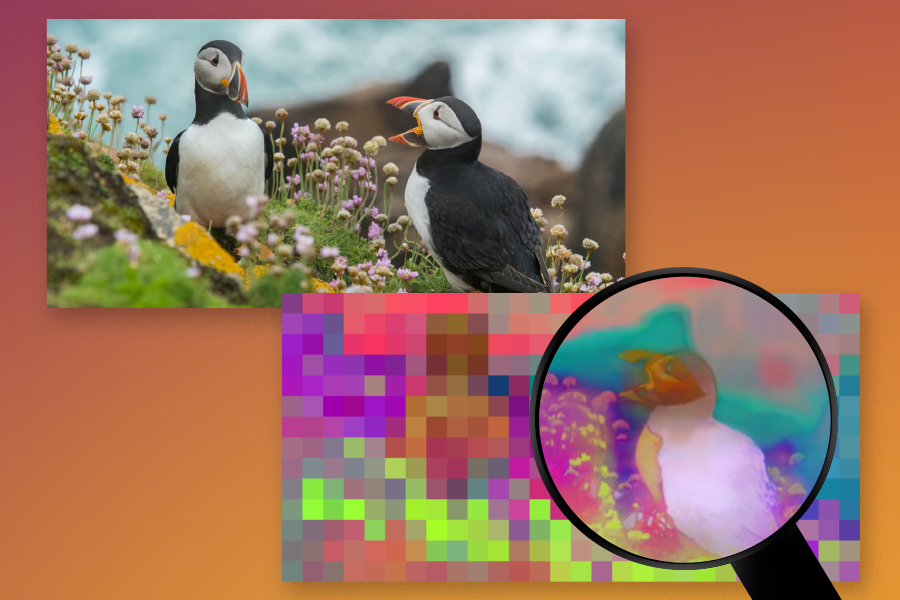
Imagine yourself glancing at a busy street for a few moments, then trying to sketch the scene you saw from memory. Most people could draw the rough positions of the major objects like cars, people, and crosswalks, but almost no one can draw every detail with pixel-perfect accuracy. The same is true for most modern computer vision algorithms: They are fantastic at capturing high-level details of a scene, but they lose fine-grained details as they process information.
Peripheral vision enables humans to see shapes that aren’t directly in our line of sight, albeit with less detail. This ability expands our field of vision and can be helpful in many situations, such as detecting a vehicle approaching our car from the side.
Artists who bring to life heroes and villains in animated movies and video games could have more control over their animations, thanks to a new technique introduced by MIT researchers.
For more than 60 years, MIT has been an undisputed pioneer in developing computing technologies that have transformed the world. The Institute’s largest research lab, the Computer Science and Artificial Intelligence Laboratory (CSAIL), has had a hand in everything from time-sharing and computer graphics to data encryption and early versions of the Internet.