The 4th annual Congress was a virtual event that featured the final report from the MIT Task Force on the Work of the Future. Hosted by MIT's Task Force on Work of the Future, CSAIL, and Initiative on the Digital Economy, this year's Congress highlighted research findings from the MIT Task Force on Work of the Future's final report released in November 2020. Given the rapidly changing environment brought on by Covid-19, this topic is more important and relevant than ever.
Tonya Hall speaks with Dr. Una-May O'Reilly, MIT IBM Watson AI lab, to learn more about the current status of artificial adversarial intelligence and the strengths of adversarial dynamics over model-based malware detectors.
Ultorg's founder and CEO Eirik Bakke proposes a solution to arbitrary relational databases. The relational database is now 50 years old, yet remains primarily a tool for programmers.
Given that our smartphones have largely become appendages over the last decade, it’s hard to imagine that ten years ago there was no Instagram, Uber, TikTok or Tinder. The ways we move, shop, eat and communicate continue to evolve thanks to the technologies we use. It can be easy to forget how quickly things have changed - so let’s turn back the clocks and reminisce about some of the computing breakthroughs that have transformed our lives in the ’10s.
Jointly part of the School of Engineering and Schwarzman College of Computing, EECS is now composed of three overlapping sub-units in electrical engineering (EE), computer science (CS), and artificial intelligence and decision-making (AI+D), which brings together computer science-heritage AI and machine learning with electrical engineering-heritage information and decision systems to exploit their significant synergies. The department will remain responsible for Course 6.
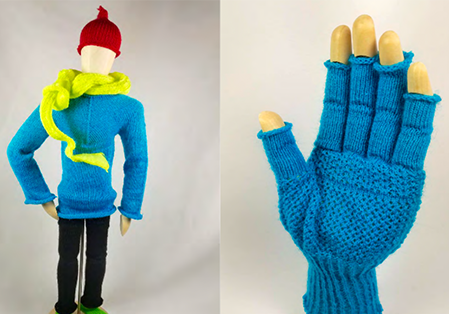
From 3-D printing to 3-D knitting, CSAIL researchers venture to streamline design technology through AI. The computer-aided design tool allows for customization of patterns based on user preferences with minimal programming knowledge needed.
Continue the conversation of AI and the Future of Work
After the AI and the Future of Work Congress on Nov 21, keep the conversation going! Cap off your time on campus by participating in the AI & Work of the Future Unconference on Friday, November 22.
Join fellow participants and bring your biggest questions and most innovative ideas to this half-day event. No pre-determined topics, keynotes, or panels - we’ll amplify and facilitate the AI and future of work-driven conversations that matter most to you and your organization.
Technology as a vector for positive change | Technology for a better world
CSAIL recently established the TEDxMIT series. The TEDxMIT events will feature talks about important and impactful ideas by members of the broader MIT community.
This event is organized by Daniela Rus and John Werner, in collaboration with a team of undergraduate students led by Stephanie Fu and Rucha Keklar.