Imagine that one day you’re riding the train and decide to hop the turnstile to avoid paying the fare. It probably won’t have a big impact on the financial well-being of your local transportation system. But now ask yourself, “What if everyone did that?” The outcome is much different — the system would likely go bankrupt and no one would be able to ride the train anymore.
A group led by researchers at MIT’s Computer Science and Artificial Intelligence Lab (CSAIL) has developed a machine learning model that can look at an X-ray to quantify how severe the edema is, on a four-level scale ranging from 0 (healthy) to 3 (very, very bad). The system determined the right level more than half of the time, and correctly diagnosed level 3 cases 90 percent of the time.
MIT researchers have developed a wireless, private way to monitor a person’s sleep postures — whether snoozing on their back, stomach, or sides — using reflected radio signals from a small device mounted on a bedroom wall.
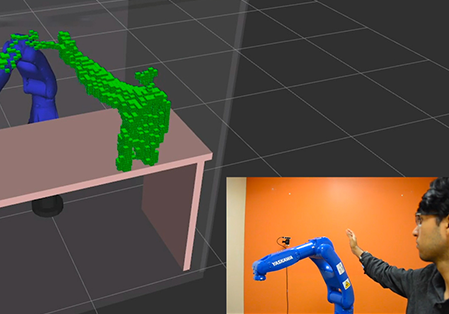
Most new roboticists want to program their robots to solve interesting, complex tasks — but it turns out that just moving them through space without colliding with objects is more difficult than it sounds.
The national dialogue on race has progressed powerfully and painfully in the past year, and issues of racial bias in the news have become ubiquitous. However, for over a decade, researchers from MIT’s Imagination, Computation, and Expression Laboratory (ICE Lab) have been developing systems to model, simulate, and analyze such issues of identity.
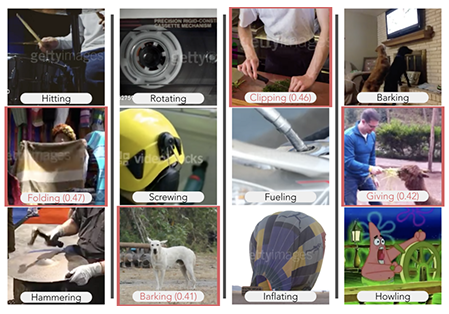
In a new study at the European Conference on Computer Vision last month, researchers unveiled a hybrid language-vision model that can compare and contrast a set of dynamic events captured on video to tease out the high-level concepts connecting them.
The U.S. National Science Foundation (NSF) announced today an investment of more than $100 million to establish five artificial intelligence (AI) institutes, each receiving roughly $20 million over five years. One of these, the NSF AI Institute for Artificial Intelligence and Fundamental Interactions (IAIFI), will be led by MIT’s Laboratory for Nuclear Science (LNS) and become the intellectual home of more than 25 physics and AI senior researchers at MIT and Harvard, Northeastern, and Tufts universities.
When a natural disaster occurs, on-the-ground emergency response teams act quickly to make life-saving decisions. Reducing the response time in such situations is critical to reduce damage impact and save lives. Helpful efforts are being taken to reduce the burden, such as a damage assessment tool by UNDP, though few automated methods exist. In recent work, MIT is creating tools that can automatically analyze images.
MIT CSAIL and STEMM Global Scientific Community announced that they will gather thought leaders from all over the world at a virtual summit dedicated to AI in Healthcare on October 1-2, 2020. The aim of the summit is to boost effective collaboration among leading AI academics, healthcare experts and business leaders to support innovation in healthcare.