Master the data tools you need—from numerical linear algebra to convex programming—to make smarter decisions and drive enhanced results. Taught by MIT CSAIL's Justin Solomon and MIT IDSS's Suvrit Sra.
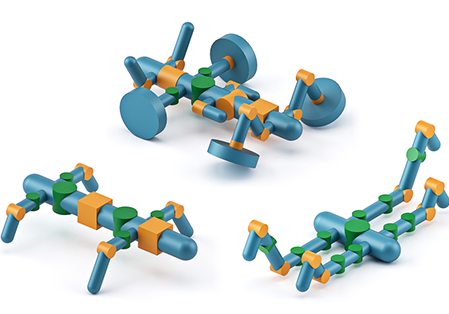
Choosing the right shape will be vital for your robot’s ability to traverse a particular terrain. And it’s impossible to build and test every potential form. But now an MIT-developed system makes it possible to simulate them and determine which design works best.
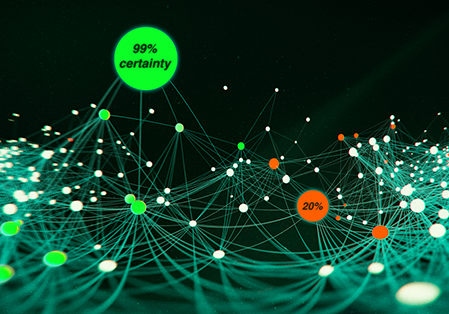
MIT researchers have developed a way for deep learning neural networks to rapidly estimate confidence levels in their output. The advance could enhance safety and efficiency in AI-assisted decision making.
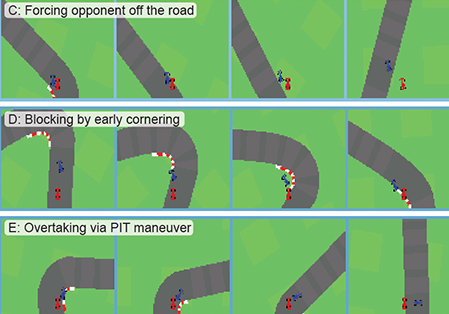
In a new paper, a team led by MIT computer scientists trained a neural network to learn NASCAR-style driving maneuvers purely from looking at a sequence of images taken from a two-person racing game. The network begins without knowing anything about cars, roads, or driving - and yet ultimately becomes able to do complex moves like overtaking an opponent on a turn and even forcing other cars off the road.
One paradox about antibiotics is that, broadly speaking, the more we use them, the less they continue to work. The Darwinian process of bacteria growing resistant to antibiotics means that, when the drugs don't work, we can no longer treat infections, leading to groups like the World Health Organization warning about our ability to control major public health threats.
Modern health care has been reinvigorated by the widespread adoption of artificial intelligence. From speeding image analysis for radiology to advancing precision medicine for personalized care, AI has countless applications, but can it rise to the challenge in the fight against Covid-19?
In an update to a five-year project from CSAIL and the Senseable City Lab, researchers have been developing the world's first fleet of autonomous boats for the City of Amsterdam, the Netherlands, and have recently added a new, larger vessel to the group: “Roboat II.”