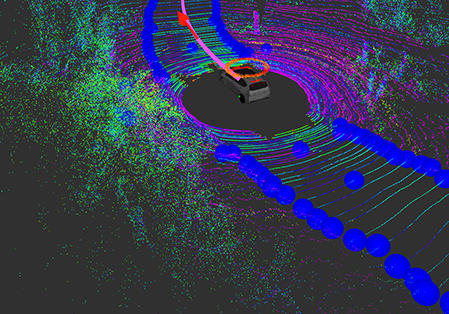
While autonomous cars have gained swift momentum since Leonardo da Vinci’s self-propelled cart circa 1500, the thought of going completely hands-free still feels slightly supernatural. These four-wheelers of the future use a combination of GPS for calculating longitude, latitude, speed, and course to navigate, LiDAR technologies, which use laser light pulses that map surroundings, and machine learning to see and understand -- but to what degree depends on the level of autonomy.
In this report, we conclude that recent fears about AI leading to mass unemployment are unlikely to be realized. Instead, we believe that—like all previous labor-saving technologies—AI will enable new industries to emerge, creating more new jobs than are lost to the technology.
CSAIL's Dr. Amar Gupta is developing technologies and business processes that are capable of quickly and accurately digitizing and processing financial and other documents with zero or minimal human intervention.
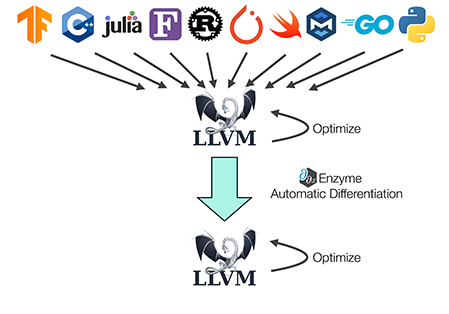
Suppose you're a machine-learning researcher trying to build a model that could help plan for the COVID-19 pandemic. You want to incorporate a disease simulator into the model, but it's written in the C++ programming language, rather than an existing machine-learning workflow like PyTorch or TensorFlow. A team from MIT CSAIL recently developed a clever work-around.
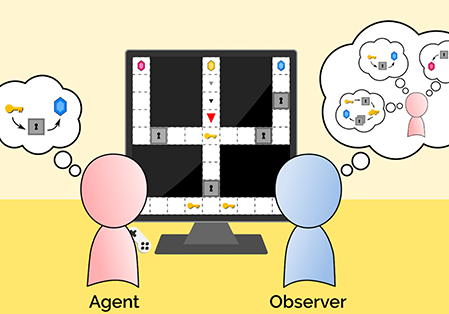
In the quest to capture social intelligence in machines, researchers from MIT’s Computer Science and Artificial Intelligence Laboratory (CSAIL) and the Department of Brain and Cognitive Sciences created an algorithm capable of inferring goals and plans, even when those plans might fail.
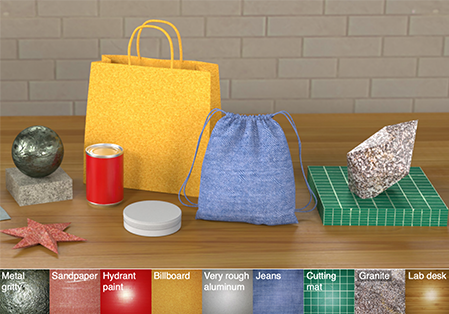
A team led by researchers from MIT’s Computer Science and Artificial Intelligence Lab (CSAIL) has developed an approach that they say can make texturing even less tedious, to the point where you can snap a pic of something you see in a store, and then go recreate the material on your home laptop
CSAIL Alliance members are invited to learn about a yet to be released design system from Professor Wojciech Matusik’s Computational Fabrication Group.
January 27 – 29, 2021 | MIT Professional Education
Examine how the latest tools and algorithms driving modern and predictive analysis can be applied in different fields, even when using unstructured data. Taught by CSAIL's Regina Barzilay, Tommi Jaakkola, and Stefanie Jegelka.
Discover how to build and utilize custom hardware for deep learning systems that extract meaningful information from your data. Taught by CSAIL's Vivienne Sze.
January 20-February 19, 2021 | MIT Professional Education
Learn techniques for applying Deep Reinforcement Learning methods to practical problems when it is impossible to collect large amounts of data. Taught by CSAIL's Pulkit Agrawal and IDSS's Cathy Wu.