Image
continent algorithms
CSAIL article

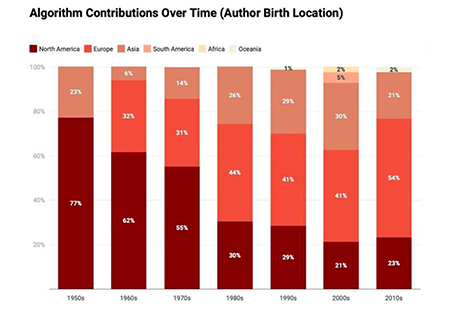
It’s no secret that algorithms run the world, powering everything from Google’s search results to Uber’s car-pool capabilities. But farther under the hood are a more fundamental set of algorithms that underpin computing: if Google PageRank is the engine, these algorithms are the parts it’s built from.

Image
algorithmic UTI's
CSAIL article

One paradox about antibiotics is that, broadly speaking, the more we use them, the less they continue to work. The Darwinian process of bacteria growing resistant to antibiotics means that, when the drugs don't work, we can no longer treat infections, leading to groups like the World Health Organization warning about our ability to control major public health threats.

Image
ML heart failure
MIT news article

A group led by researchers at MIT’s Computer Science and Artificial Intelligence Lab (CSAIL) has developed a machine learning model that can look at an X-ray to quantify how severe the edema is, on a four-level scale ranging from 0 (healthy) to 3 (very, very bad). The system determined the right level more than half of the time, and correctly diagnosed level 3 cases 90 percent of the time.

Image
brain computing
MIT news article

OpenAI unveiled the largest language model in the world, a text-generating tool called GPT-3 that can write creative fiction, translate legalese into plain English, and answer obscure trivia questions. It’s the latest feat of intelligence achieved by deep learning, a machine learning method patterned after the way neurons in the brain process and store information.