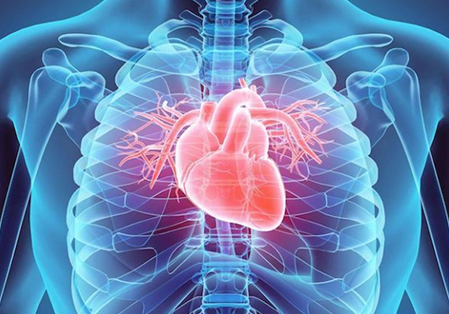
A team from MIT’s Computer Science and Artificial Intelligence Laboratory (CSAIL) came up with a new system for better predicting health outcomes: a machine learning model that can estimate, from the electrical activity of their heart, a patient’s risk of cardiovascular death.
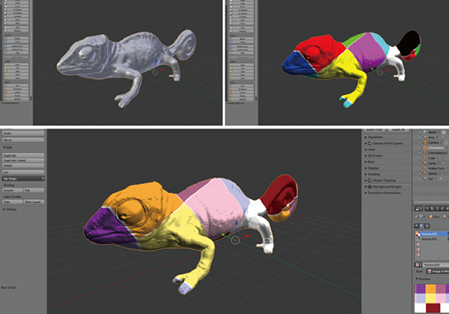
A team from MIT’s Computer Science and Artificial Intelligence Laboratory (CSAIL) has brought us closer to this chameleon reality, by way of a new system that uses reprogrammable ink to let objects change colors when exposed to ultraviolet (UV) and visible light sources.
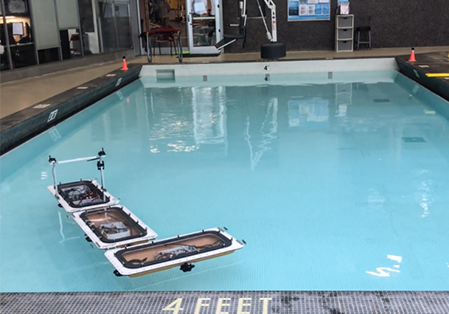
MIT’s fleet of robotic boats has been updated with new capabilities to “shapeshift,” by autonomously disconnecting and reassembling into a variety of configurations, to form floating structures in Amsterdam’s many canals.
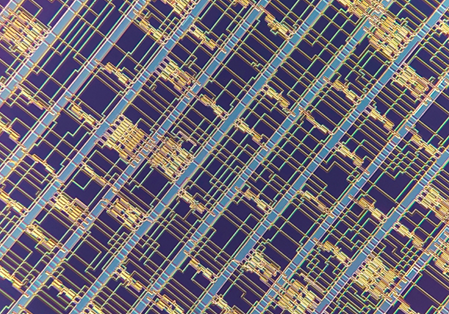
After years of tackling numerous design and manufacturing challenges, MIT researchers have built a modern microprocessor from carbon nanotube transistors, which are widely seen as a faster, greener alternative to their traditional silicon counterparts.