The Geometry of Just About Everything

In this episode

What does Pixar, snow shoveling, and AI have in common? Geometry. At MIT CSAIL, Prof. Justin Solomon puts geometry at the center of his research, and it’s a lot more than shapes and angles. He explains how the same mathematical ideas can help self-driving cars recognize pedestrians, make computer graphics more realistic, and even guide New Englanders on the most efficient way to shovel snow. 


Solomon discusses the meaning of the Navier–Stokes equation breakthrough, why he thinks humans still matter in the lab and the classroom, high vs. low dimensional data, his early work with Pixar, and his Erdős–Bacon number. Learn what that is and more in this episode of Building 32. 
 

Episode Resources:

Student Rickard Brüel Gabrielsson’s paper on LoRAs
Six Degrees of Kevin Bacon
Erdős number
Erdős–Bacon number
Justin’s IMDb page


Learn more about Justin:

Spotlight
Personal website
CSAIL page
 

About the speakers

Associate Professor, MIT EECS

Professor Justin Solomon, who leads the Geometric Data Processing group in MIT CSAIL, sees a broadly applicable, versatile toolbox for applied geometry as the solution to these and other problems. To solve growing challenges in shape analysis, his work advances the theory and practice of geometric data processing.

Before joining the MIT faculty as a professor of EECS, Prof. Solomon received a PhD in computer science from Stanford University and worked at Pixar Animation Studios; he also completed postdoctoral research in the Princeton Program in Applied and Computational Mathematics. His textbook Numerical Algorithms covers numerical methods for geometry, graphics, robotics, and other computational areas.

His group aims to widen the scope of applied geometry to benefit anyone using computers to analyze complex shapes, networks, maps, datasets, and other modalities. Central areas of his research include transitioning optimal transport from theory to practice, addressing both theoretical and algorithmic challenges in 3D shape analysis, and developing architectures for learning from geometric data.

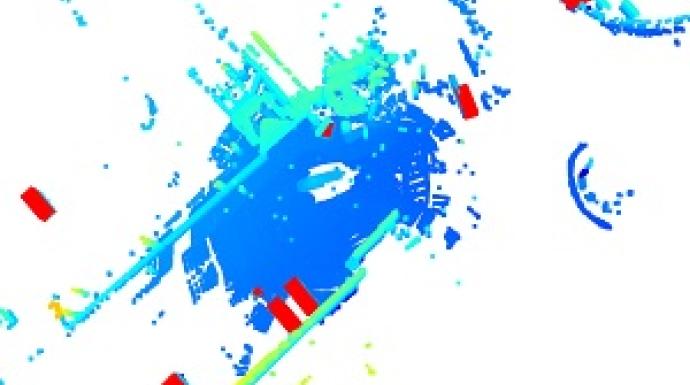
Prof. Solomon and his group respond to challenges at the intersection of geometry and computation in a broad range of applications as technology emerges – making sure that robots and autonomous vehicles can navigate their environments safely and reliably, that political redistricting practices are established fairly, that physical systems can be simulated virtually with high fidelity, and that medical diagnoses are responsive to subtle changes in shape.

Moderator & Host of Building 32

Karen Given is an award-winning podcast showrunner, story editor and coach. A veteran of public radio, Karen is the former executive producer and host of NPR’s Only A Game. She won the national Edward R. Murrow award twice, in 2007 and 2017. Since leaving public radio, Karen has focused on the podcast space, most notably on Believable: The Coco Berthmann Story, one of The Atlantic’s top 25 podcasts of 2023. Karen’s other projects include, The Afghan Impasse, a special season of The Negotiators, from Foreign Policy and Doha Debates; Before We Go, and What Takes Root: Stories of Resistance and Reclamation. Given teaches narrative storytelling workshops and writes Narrative Beat, a free newsletter for journalists and podcast makers who want to tell better stories.