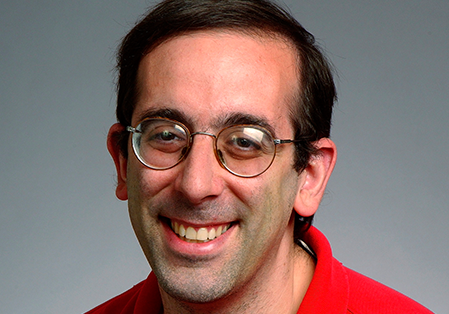
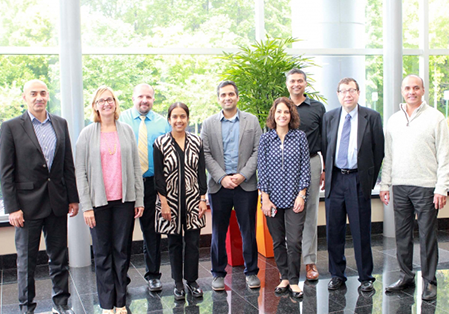
The American Academy of Arts and Sciences (AAAS) announced that MIT professor David Karger was among their new 2019 members. The new class of more than 200 members recognizes the outstanding achievements of individuals in academia, the arts, business, government, and public affairs.
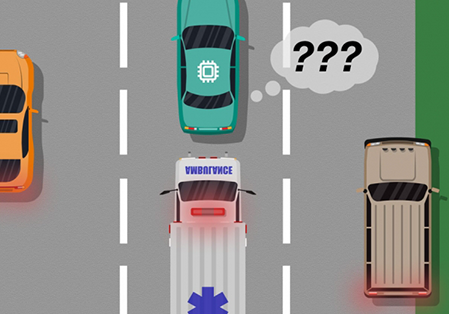
MIT CSAIL researchers have devised a new way to find such patterns using machine learning.
Their system uses a neural network to automatically predict if a specific element will appear frequently in a data stream. If it does, it’s placed in a separate bucket of so-called “heavy hitters” to focus on; if it doesn’t, it’s handled via hashing.
MIT is celebrating the launch of the new $1 billion MIT Stephen A. Schwarzman College of Computing. To help commemorate the event, here’s a list of 25 ways in which MIT has already transformed the world of computing technology.
Today’s data centers eat up and waste a good amount of energy responding to user requests as fast as possible, with only a few microseconds delay. A new system by MIT researchers improves the efficiency of high-speed operations by better assigning time-sensitive data processing across central processing unit (CPU) cores and ensuring hardware runs productively.
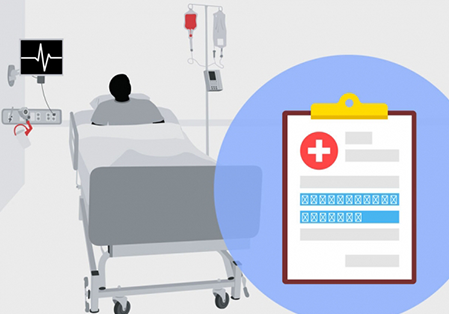
Neural network assimilates multiple types of health data to help doctors make decisions with incomplete information.
MIT researchers have developed a model that can assimilate multiple types of a patient’s health data to help doctors make decisions with incomplete information.
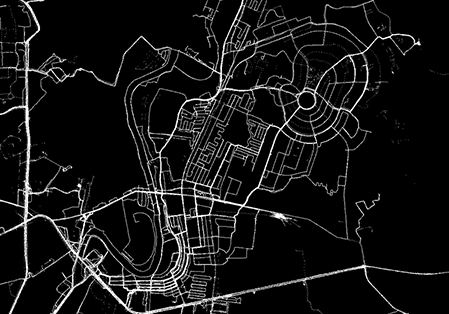
Current approaches to construct road network maps from GPS trajectories suffer from low precision, especially in dense urban areas and in regions with complex topologies such as overpasses and underpasses, parallel roads, and stacked roads. This paper proposes a two-stage method to improve precision without sacrificing recall (coverage).